New Book Review 31: Rise of the Europan

europanThe next book I’m reviewing is Rise of the Europan, a collaborative science fiction work led by Joel Stottlemire. The book’s central premise is that in a future where humans have established colonies on other worlds in the solar system and elsewhere in the galaxy, settlers on Europa, the ice moon of Jupiter, have awakened a god-like entity (Genabyel) who begins a campaign of destruction against humanity. The book contains interrelated stories by six different authors chronicling the events of this war, on different worlds and from the perspectives of different people and from Genabyel himself.

Using multiple authors to tell various parts of one story is an ambitious project, and I laud these authors for taking it on. The project brings to mind the Star Wars expanded universe novels (the Thrawn trilogy, the New Jedi Order series, etc.) which I consumed and loved as a teenager. It gives a sense of size and scale to the narrative, even when the characters of the different stories don’t interact with one another. The continuity and connectivity of it, the fact that in spite of the distance between stories it maintains cohesion, is admirable.

Of course, the fact that the stories uses different viewpoints in different locations means that the novel-length book does not follow a consistent set of characters, but instead several characters with short character arcs. The only character who appears in each of the stories is Genabyel himself, about whose personality and attributes we learn more and more as the book progresses. Genabyel has some Lovecraftian attributes about him. He comes from a home deep beneath a strange ocean, he claims to have travelled through other dimensions and made contact with various divine beings, and he looks on humans in the same way that a human might look on cockroaches: troublesome creatures to be crushed. He thinks of destroying humans as a divine mission, and uses language reminiscent of the Bible in his musings about them. I liked Genabyel as a character; at first I thought he might be just a Cthulhu knock-off, but as the story progressed I appreciated how well-developed he was. The human characters that appeared throughout the stories were, as far as I recall, adequately developed as well. There are soldiers, politicians, scientists, and generally diverse cast all reacting to the crisis of the Europan in various ways, some heroic and some cowardly. We don’t get to spend a lot of time with these characters, but the time we get is enjoyable.

The war against the Europan, however, is completely hopeless. He is undefeatable, and this kid of has the effect of making the genre here seem a variant of apocalyptic fiction. It’s about the human characters reacting to the end of their world, that is to say the end of their world-spanning human civilization. The sequences of destruction, happening in their various ways and various places, are very detailed, and generally I liked the way the book was written. There was one significant problem, a surprising one given the otherwise high quality of the book. There were tons of typos, tons of misused apostrophes and spelling errors and use of incorrect words. The problem was throughout the book, not just in the stories of one or two of the authors. A bit more proofreading  would have easily solved the problem.

Now, once again, my bit of promo. If you are a fan of fantasy, you can look into my own book, Tales of Cynings Volume I, in print format here or Kindle format here.
New Book Review 30: Stormwielder

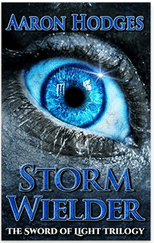
stormwielderThe thirtieth book I’ve reviewing here is Stormwielder, the first of the Sword of Light trilogy by Aaron D. Hodges. Based on the information given about the world in which the book is set, the genre could be epic/high fantasy, but  since this first book was only concerned with a small number of characters and events, I’m more inclined to simply call it medieval fantasy for now.
As we learn in the first chapters of the book, the protagonist is a young man named Eric who is cursed with a magical connection to the weather. Anytime he gets upset or angry, storms and lightning fill the air around him, wreaking havoc. His inability to control prevent this reaction causes an entire city to be burned up by lightning strikes, causing Eric to flee from the vengeful survivors of the city, who believe him to be a demon. As he flees, Eric is aided by an old man named Alistair, who is eventually revealed to be a ‘magicker’ (the term this author uses for characters who might otherwise be called wizards). Alistair mentors Eric in the control and use of his magical powers and guides him through many dangers and perils with the goal, eventually, of saving the world from ominous forces led by the dark lord Archon, who seeks to take control over it.

Now, I will readily admit that this book uses some very common clichés. The teenager whose superpowers make him a danger to others could come right out of an episode of Agents of S.H.I.E.L.D. The wise old wizard mentor has been played out in Gandalf, Obi-Wan Kenobi,  Zeddicus Zu’l Zorander, and so on throughout fantasy culture. The power-hungry magical dark lord has likewise been seen dozens of times in Sauron, Voldemort, Arawn Death-Lord, and others.  Much of the book’s content has been done many times before. However, it did have a few concepts that I hadn’t seen before, such as the particular way that magic works in this world. I can’t explain that here without giving major spoilers, but it was unique.

There were also a lot of typos throughout the work. I’ve come to generally expect that of self-published novels, having spent a year reading them, but it still always irritates me. Apart from that, many aspects of the book’s plot relied on plot twists which I thought came rather abruptly and clumsily. With a good plot twist, the reader can see in retrospect how the story led up to the twist, but with the few plot twists that this book had, I got the impression that they were just dropped into the story without any lead-up. There was also a romantic arc which I didn’t find convincing or necessary, but of course different people will have different preferences about that.

I don’t want to criticize too much though, because I did enjoy the book. As a fan of the fantasy genre, I thought it was a fun read and I’m sure other fans of the genre will think the same. It’s also more light-hearted than something like, say, A Song of Ice and Fire. There wasn’t any profanity, the violence was at times descriptive but still generally PG-13, and there wasn’t any explicit sex. There was implied sex, but not explicit. I think parents could allow their teenage kids to read this book without too much concern.

Now, once again, my bit of promo. If you are a fan of fantasy, you can look into my own book, Tales of Cynings Volume I, in print format here or Kindle format here.

New Book Review 29: SciFan Magazine January 2017

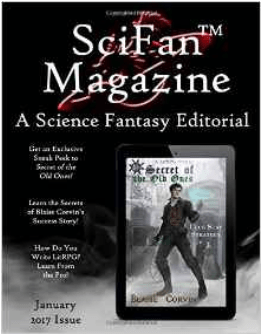
scifanThe next book review I’m doing is a little different than the previous ones. I’m reviewing the January 2017 edition of SciFan Magazine, a monthly digital magazine designed to showcase current and upcoming independent authors. The editor is Richard M. Mulder, whose work I hope to review at a later date. There were thirteen stories/excerpts in the magazine, and I will address each of them here.
The first, ‘Octov’s Rise to Ainoren’ by Dawn Chapman, is an excerpt from the novel The Secret King: Lethao, which I reviewed on this blog here. Chapman’s work is excellently written, with strong detail and description and otherworldly characters who are familiar enough for the reader to empathize, yet whose otherworldly attributes and powers create a sense of wonder while reading.  This particular excerpt is full of action and intrigue, and I liked it.

The second, ‘Séance on Death Row’ by Douglas Kolacki, is a short horror story in which a group of people, including a murderer, hold a séance to speak with the murderer’s victim. It was an older style of horror, relying heavily on implication and imagination, with dread permeating the story and with the horror stemming from forces beyond the grave which may be seen but not fully understood. It reminded me of Edgar Alan Poe’s work. I liked it.

The third, ‘The Tot of Wonder’ by John Taloni, is a much more lighthearted and goofy tale of a superhero father who lives with his non-super wife and his super-powered toddler son.  There’s not a whole lot to it, but I think it’s geared more toward a young audience. It felt a little out of place in this magazine, but as a work for children I suppose it’s fine.

The fourth, ‘Miss Soames’ by Kyle Hemmings, was an odd one. I can’t say much about it without completely spoiling the story, but I didn’t like it very much. The prose was okay, but the plot was kind of nonsensical, a sort of bait-and-switch horror story that was so busy trying to surprise the reader that it forgot to be scary.

The fifth, ‘Orlok’s Song’ by David Castlewitz, was my favorite in the magazine. In this short story, there is a sentient species called the Peet (animal-like beings) who have been driven from their forest homes by human enterprise. Orlok is the father of a family that tries to survive in the new concrete forest of city slums. The writing in it was beautiful, and the story was brief but excellent in its narrative and conclusion. I’d definitely recommend this one.

The sixth, ‘Voices Beneath the Ice’ by Matthew McKiernan, is a sci-fi story with horror elements involving a trio of astronauts who land on Europa (a moon of Jupiter) and begin to find strange reasons to hate each other. I liked the concept a lot, but some of the prose needed work. I think this story has a lot of potential, and could be really great if some more time was given to it.

The seventh in the magazine is an excerpt from the book Secret of the Old Ones by Blaise Corvin. Its genre is given as LitRPG Sci-Fan™, in which the real world and the world of gaming are both important to the narrative. The only issue I have with the excerpt is that the character never seemed to really be in danger, but since it’s just an excerpt of a larger work, I’m sure there will be more conflict and excitement later in the story. I really liked this excerpt, and I’ll probably read the book at some point.

The eight is also an excerpt, titled ‘The Stirring’ by Jaren Fleming. It was something like Christian creationist science fiction, about a planet that serves God (here called The Father) at war with gooey alien beings that serve Satan. The whole excerpt was nothing but combat, and the writing was good, but  I hope there is character development and more fleshing-out of the story in the larger work. I wasn’t a huge fan of the premise, but I can imagine other people liking it quite a lot.

The ninth was ‘Stormguard: The Invisible War’ by Tom Fallwell. It was another case of Christian-themed action sci-fi. I can’t say much about it without spoiling the whole story, but it starts with a man waking up in a crater with no memory of who he is or where he came from. The writing was okay, but I thought the premise was kind of a cliché. This was an excerpt of a larger work as well, but I probably won’t seek out the larger work.

The tenth, ‘Spacejacking’ by Russell Hemmell, seems like it may be an excerpt from a larger work, but it was unclear to me. It’s a futuristic tale of an alien abduction during space exploration, and the subsequent consequences. Again, I can’t say a lot without giving away the entire story, but I liked this one. It had some interesting and unusual ideas in it, and if it is part of a larger work I’d like to see where the story goes.

The eleventh story, ‘The Brat and the Other Country’ by David Perlmutter, was a real oddball. The premise was similar to the film ‘Who Framed Roger Rabbit?’, if that film was a story about superheroes rather than a detective story. In the story, the cartoon characters of Earth actually live on another planet, and the main character is a superhero human who works alongside superhero cartoon characters. I can imagine other people really loving the premise, but it was just a bit too much of a stretch for me.

The twelfth story, ‘In the Hot Mists’ by John A. Frochio, is a steampunk tale about an airship race in which one airship has an unfair advantage because it’s crewed by extraterrestrials. Strange as this premise is, I liked it. The writing was good, it put a new spin on a familiar story, and I think lots of other people would enjoy the story too.

The last story (good job for sticking with me this long!) is ‘The Keystone Islands: Portals of the Grave’ by Lander Allen. It’s the first three chapters of a larger work, a soft sci-fi work set in a universe where Earth is a cultural center resented by the other planets. The tetrapath infection turning its victims into horrific monsters, and the protagonists have come from who-knows-where and are trying to figure out their past in the midst of this plague. It’s well-written and very intriguing, and I’d like to see where the story goes.

So, those are the thirteen stories from the January 2017 edition. I expect to review later editions of the magazine in this blog as well, as it seems like a great way to see at a glance what’s going on in the indie fantasy and sci-fi community.

Now, once again, my bit of promo. If you are a fan of fantasy, you can look into my own book, Tales of Cynings Volume I, in print format here or Kindle format here.

New Book Review 28: The Breath of Aoles

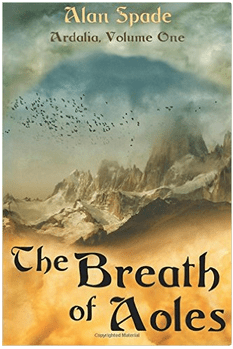
aoles-coverThe next book I’m reviewing in Alan Spade’s The Breath of Aoles, the first book in the Ardalia trilogy. The genre is fantasy, although the other books of the trilogy may expand the world and events to something more like epic or high fantasy. It takes place in a fantasy world of impressive ambition. Most fantasy authors use real-world fauna and flora interspersed with more fantastic and mythological creatures, but in this book every plant and animal was an invention of the author. There was none of the humans and dwarves and elves that we often in fantasy either. The (((SPOILERS IN THIS AND THE NEXT PARAGRAPH)))main character is of a four-fingered three-nostriled species called hevelens, which share their world (which has two moons) with the rock-like krongos race and the telephathic malians.
Our protagonist, Pelmen, is a teenage hevelen who lives a miserable life in the city of Durepeaux, working in his demanding and controlling father’s tannery. When Pelmen runs away, a misadventure with fire-casting sorcerers called crimson shamans brings him back to his city him to live with his bitter old uncle Xuven while attempting to learn the art of hunting. When Pelmen’s friend Teleg disappears under similar circumstances, Pelmen and Xuven assume that he has been kidnapped by crimson shamans as Pelmen nearly was, and they set off on a mission to rescue him. The mission takes them through a variety of places and adventures before they finally reach their destination: a fortress on a volcano, the center of operations for the sinister crimson shamans. (((END SPOILERS)))

If you take this story and you strip away the unique creatures and terrains, it’s a fairly standard journey narrative. We’ve seen protagonists grow and learn over the course of a long journey in hundreds of stories before. Frodo and Samwise do it, Abraham and Sarah do it, Sal Paradise and Dead Moriarty do it, Lolita and Humbert Humbert [*shiver*] do it, it’s very a common theme. This is not necessarily a bad thing. This type of story is popular because it works, as long as it’s written well. This particular book is written well. The mystery and danger of the quest keeps the reader engaged, and the flashiness of the fantastical world keeps the reader interested. It’s a good fantasy novel, unlikely to convert non-fans of the genre but certainly enjoyable for the established devoted.

I do have to remark that the book is slow. There are a handful of exciting bits in the journey, but there is also an awful lot of walking and talking. The author’s creation of unique animals and plants for this book’s world is ambitious, but frequently it was also confusing. When the characters are interacting with their nidepoux and melepeks, their beasts of burden, I don’t know what to visualize. Occasionally descriptions of them would cut off the natural flow of a paragraph, and even with the description I still feel more lost than I would if the characters just uses horses and oxen. There was also a brief romantic arc to the story which seemed, to me at least, out of place. I didn’t think it contributed to the narrative much and overall it didn’t seem very credible. Readers can of course form their own judgments on that.

Overall, I was glad to have read it. I think the novel is a worthwhile contribution to the genre, and the ending left me with enough curiosity that I will probably get the next book in the trilogy (titled Turquoise Water) to see where the adventure goes next.

Now, once again, my bit of promo. If you are a fan of fantasy, you can look into my own book, Tales of Cynings Volume I, in print format here or Kindle format here.


New Book Review 27: Atomic Underworld: Part Two

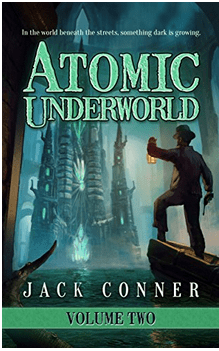
atomic-underworld-2-coverThe twenty-seventh book I’m reviewing here is Atomic Underworld: Volume Two, by Jack Conner. This book is the sequel to one I reviewed a few months ago, Atomic Underworld: Part One. That review may be read here. Within the same world this author also has the Atomic Sea series and the books Nightmare City and City of Shadows.
A quick recap of the setting: the story takes place in and around the subterranean city of Muscud, which sits over the highly toxic Atomic Sea. In this alternate world technology has developed in a steampunk-like direction, and humans share the city with various pre-human alien species and with humans afflicted by the mutating effects of the sea. Rival gangs hold the most power in the city, but power also belongs to the cultists who worship various otherworldly gods. In the last book, our hero Tavlin “Two-Bit” Metzler, a gambler and thief and all-around rogue, was captured by cultists and brought to the temple of their god, Magoth. This second part to the story begins with Tavlin’s captivity and brainwashing in their temple. Other characters working with and against Tavlin include his ex-wife Sofia, friend and brutal mob boss Vassas, rival mob boss and cultist Havictus, the cult leader known only as the Lady, and a ghostly woman of ambiguous allegiance named Millicent.

As noted in the review of the previous book, the strongest feature of these books (probably of all Conner’s work) is the detail. The stinking, toxic, moist underworld that he paints feels stinky and toxic and moist. The description is vivid and graphic, and I really appreciated that. The characters are in some ways a little cookie-cutter (Boss Vassas is every cigar-chomping mob boss ever, Tavlin is right out of the Han Solo/Jack Sparrow/Malcolm Reynolds school for likable outlaws, all of the gangsters are noir characters with superficial mutations), but they’re fun anyway. Now, as I said, I read the previous book a few months ago, so I generally remembered who the characters are, good guys and bad guys and whatnot, but I couldn’t really remember which slimy jiggly pre-human alien race was which, and the sequel didn’t really take any time to recap those details. The story goes straight forward where the last book ended, with no recaps at all. For this reason, I wonder why the two books are in separate volumes at all. I’m aware that the author also released an Omnibus Edition with both books included, but why not just have them together as one novel? I can guess, but I prefer not to be cynical and to instead hope that the reason was creative.

For anyone who wishes to read these stories, the genre needs to be well understood. These are pulpy action stories. They take some inspiration from the horror tales of H.P. Lovecraft, but they are not horror. The purpose of these stories is to entertain, and in that capacity they deliver. A small advisory warning: the book contains a lot of graphic violence, some references to rape, and one descriptive sex scene. Some more sensitive readers might be put off by these features, though I personally was not. I found both of these books fully entertaining, and I expect if I read other work by this author I will encounter the same. The conclusion especially, the climactic fight scene that resolved the story, was especially satisfying. Fans of action and crime stories, dark fantasy, and horror/pulp fiction are the recommended audience for these books. As a fan of science fiction and fantasy, I loved them.

Now, once again, my bit of promo. If you are a fan of fantasy, you can look into my own book, Tales of Cynings Volume I, in print format here or Kindle format here.

This post was originally featured on cwbookclub.com.

New Book Review 26: The Final Warden

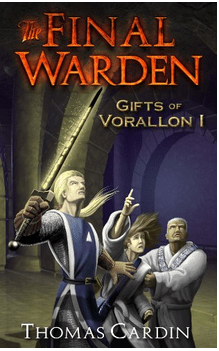
the-final-warden-coverFor my twenty-fifth book review in this blog and first book review of 2017, I’m reviewing The Final Warden, the first book in the epic fantasy series ‘Gifts of Vorallon’ by Thomas Cardin. The world in this book is close to something out of J.R.R. Tolkien or R.A. Salvatore, with humans living in alliance with elves and dwarves while threats to their world manifest in the forms of ogres, trolls, and demons. It’s a familiar epic/high fantasy type of world, but it was well executed here.
The protagonist of the novel is Lorace, a young man who awakes one day with ritualistic scars on his body and no memory of where he’s come from. In this world many people have a particular ‘gift’, which could just as easily be called a ‘power’ or ‘ability’. As the story progresses Lorace discovers his own gift, which he calls ‘sight’, the power to see within his mind places far from his location. In the context of the fictional world these gifts are said to be given by various gods, worshipped by the humans, dwarves, and elves together. Lorace is in possession of a mystical artifact called the godstone, sacred to the gods (naturally). With the aid of humans from the city of Halversome and dwarves from the city of Vlaske K’Brak, Lorace works to recover his memory and discover why it was lost. Along the way he becomes drawn into a war between the peoples of this world and demons from the realm of Nefryt, whose ravages threaten to destroy the world city by city.

The strongest aspect of this story is the quality of its worldbuilding. Within the first few pages, the amount of detail and complexity to the setting blew me away. The details of the world came out naturally, through character interactions and through comfortably brief narrator’s exposition. I was impressed with it, and I hope that I can come close to doing as well in my own work.  The plot was at some points plodding and it took some time to get set up to certain key events, but I wouldn’t say I was bored with it. The book is relatively short, just over 200 pages, so for me it was a quick read overall.

There were several typos throughout the book, such as using “–ing” when “–ed” is meant and misusing apostrophes frequently. Given the overall quality of the rest of the story, this was strange to me. Apart from that, the story ends on something of a cliffhanger. Lorace’s main story arc is completed, but the arc of another character, a demonic entity called the Devourer, is left unresolved. This book is the first of three, so I may well get the next in the series to see what becomes of the Devourer. Cliffhangers are an annoyance to many readers, but the fact that the main arc of the story was resolved satisfied me in this regard.

The last comment I want to make on this book is that it fits one fantasy category that I’ve been hearing a lot about lately: Noblebright. The opposite of GrimDark fantasy, Noblebright is generally positive and optimistic. Heroes are heroic and villains are defeatable. This may make for more predictable storytelling, but it also provides some comfort for many readers who’ve felt lost with the recent trend that’s been popularized by ‘A Game of Thrones’ and its imitators. Fans of Noblebright fantasy and fans of more tradition epic fantasy will enjoy this book, and I’m pleased to say that I did.

Now, once again, my bit of promo. If you are a fan of fantasy, you can look into my own book, Tales of Cynings Volume I, in print format here or Kindle format here.

This post was originally featured on cwbookclub.com.

New Book Review 25: Feeder

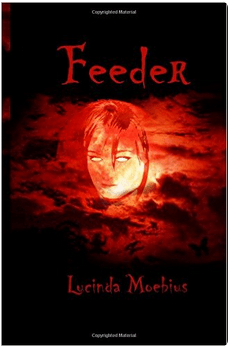
feeder-coverThe twenty-fifth book I’ll review in this blog is the modern/urban fantasy novel Feeder, by Lucinda Hawks Moebius. Lucinda has been extremely supportive of the online independent author community and devotes a tremendous amount of effort and energy to it, so I’m happy to give her some support back. This novel could be categorized as horror, but I hesitate to call it that because it didn’t seem to be written with the intent of scaring the reader. But of course, as with any book, another reader may view it differently.

The protagonist and narrator of this novel, Maria Christine, is known as a Were, or a Feeder, soul-eater, vampire, demon, etc. Different cultures give different names to her species. Members of her species call themselves Were, and within her species there are different types of Were with different attributes and abilities. The greatest similarity between all Were is the need to feed upon the life energy (that is to say souls, more or less) of living humans. For better or worse, Feeder is a vampire novel. This might be off-putting for a lot of readers, but as they say you shouldn’t judge a book by its genre (well, they say something like that). Every author who takes on the vampire concept puts their own spin on it, and this author is no exception. Rest assured, this book isn’t just a carbon copy of Twilight (thank goodness). Nobody sparkles, nobody is especially attractive, and in fact it’s quite a bit more brutal and gritty than many other vampire-related works I’ve read. Maria Christine lives in the streets. She came from an abusive foster care background and is essentially a loner. The only person she trusts is Agnes, her caretaker and fellow Were, whose manipulations and wicked schemes set our antihero running for her life into an unfamiliar world of warring Were covens and predatory Were-hunters.

It’s difficult to pin down exactly why, but for some reason a good long stretch of this novel felt like an elaborated version of an urban legend. Something about Maria Christine seemed like she could be a monster from this twenty-first century mythology, this glass-and-concrete folklore. Part of this is the way that humans are treated in the book. In short, humans are not characters. They are faceless and oblivious, existing only to be fed upon by the Were. Maria Christine is a sympathetic character, but her need to kill humans to survive makes her into an antihero. I can imagine teenagers whispering this story of story to one another in the same way tales of creatures like Slenderman and Stick Indians were whispered in my own school. Personally I love mythology and folklore in whatever form it takes, so I admire the way this book managed to capture this urban legend kind of feeling.

There is a lot to like and admire in this book, but it did have some downsides. The antagonists aren’t very well fleshed-out and seemed kind of clichéd. Some of the excitement slows down a lot halfway through when Maria Christine finds a more safe and stable place to live, and there were some dull stretches there. And, there were a good number of typos throughout the book. All of that being said, I enjoyed it. Vampire fiction isn’t exactly my cup of tea, but I liked this book and I’m certain that fans of vampire fiction or supernatural fiction or urban fantasy will enjoy it even more than I did.

Now, once again, my bit of promo. If you are a fan of fantasy, you can look into my own book, Tales of Cynings Volume I, in print format here or Kindle format here.

If you liked this book review, you can see my others here: New Book Review 1New Book Review 2New Book Review 3New Book Review 4New Book Review 5New Book Review 6New Book Review 7New Book Review 8New Book Review 9New Book Review 10New Book Review 11New Book Review 12New Book Review 13New Book Review 14New Book Review 15New Book Review 16New Book Review 17New Book Review 18New Book Review 19New Book Review 20New Book Review 21-New Book Review 22New Book Review 23New Book Review 24

This post was originally featured on cwbookclub.com.

Year-End 99 Cent Promotion

pic of coverThis has been a really interesting year for me. I was very happy to publish Tales of Cynings Volume I this year, and the feedback I’ve been getting has been so encouraging! Using this blog as a way to connect with other authors has also been good, and I’m pleased with the people I’ve met and the interactions I’ve had. These book reviews will definitely continue in 2017. I’ve made good progress on Tales of Cynings Volume II as well, and I’m excited with some of the new storylines and ideas that I’m working with there. However, I can’t give a clear date on when the book will be done. It depends on a lot of factors. I’d like to say before 2018, but we’ll just have to see.
Now, in celebration of the end of this year, I’m making the digital version of my book just 99 cents until New Years Day! The deal ends at midnight, and I won’t run another like it for a good long while. If you’ve enjoyed the content on this blog, try out the book! I’m doing a lot of authors a favor with this blog, and some return on that would be greatly appreciated. Link to the book is here.

Thanks for reading!

New Book Review 24: Seed of Scorn

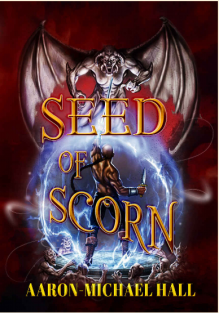
seedofscorncover.PNGThe twenty-fourth book I’m reviewing on this blog is Aaron-Michael Hall’s novel Seed of Scorn, the second of her epic fantasy series Rise of Nazil. I reviewed the first of the series, Secret of the Seven, in a previous post which may be read here. As I noted in the earlier review, this series has some representations of sexual assault. Readers who have suffered from traumatic experiences or are sensitive about these subjects should abstain from this series.

The last book [[[[SPOILERS]]]] concluded with a war to free the land of Faelondul from the tyrannical rule of the city of Nazil, whose inhabitants worshipped fascist gods and treating humans as slaves. The good Nazilian warrior, Pentanimir Benoist, has become the new ruler of Nazil, the seven true gods have revealed themselves to the land, and a new age of peace has apparently begun. As this book begins, unrest is growing among the Nazilians who favored the old order. There is talk of revolt against Pentanimir and restoration of the strict racial hierarchy of the past. In the meantime spiritual enemies of the seven gods are reaching out to make an invasion of Faelondul, pulling hapless Nazilians under their power.  The air is filled with palace intrigue and dark omens.

There is a lot going on and a lot of potential for excitement, but one thing that this book has in common with the previous one is that it moves at a glacial pace. The book is over 500 pages long, well over half of the pagespace is devoted to characters discussing the events of the previous book and characters developing their romantic relationships. In the previous book a lot of space was dedicated to graphic description of torture and rape, and this book has much less of that. It is easier on the stomach, but (and I hate to say this) for long stretches I thought it was kind of boring.

Now, to be clear, the relationships and interactions between characters were quite complex, and written very well. If I was coming to this book with the intent of reading romance, I might be thrilled with this. But, I came to it as a work of epic fantasy. Romance epic fantasy could be a genre that I’m just not familiar with, but if so it seems a very niche group, possibly someplace where fans of George R.R. Martin and fans of Nicholas Sparks overlap. I am a fan of George R.R. Martin, but romance stories bore me. This is not at all to say that the book was badly written, simply that it wasn’t for me.

On the topic of sexual assault, this book had one major deviation from the previous book and from many works of fantasy in general. In the few sexual assaults that happen in this book, the victims are male. It’s a bold move which carries an entirely different set of implications and power dynamics than the alternative, and it moves the plot forward in different ways.

Really, I think this book and this series is likely to be a love-it-or-hate-it affair for most readers. I can imagine other readers loving it. I’ve dedicated a lot of time and effort into getting this far in the series, and I haven’t yet decided if I’ll go on to the third book, Piercing the Darkness. I might, just to see what becomes of the events set up in this one.  Fans of both romance and epic fantasy will enjoy this book, though perhaps not fans of romance and fantasy respectively.

Now as always, my bit of promo. If you liked this book review, you can see my others here: New Book Review 1New Book Review 2New Book Review 3New Book Review 4New Book Review 5New Book Review 6New Book Review 7New Book Review 8New Book Review 9New Book Review 10New Book Review 11New Book Review 12New Book Review 13New Book Review 14New Book Review 15New Book Review 16New Book Review 17New Book Review 18New Book Review 19New Book Review 20New Book Review 21-New Book Review 22New Book Review 23

If you are a fan of fantasy, you can look into my own book, Tales of Cynings Volume I, in print format here or Kindle format here.

This post was originally featured on cwbookclub.com.

New Book Review 23: Cthulhu Armageddon

cthThe twenty-third book I’m reviewing on this blog is Cthulhu Armageddon by C.T. Phipps. It’s billed as a post-apocalyptic western, but I’d say calling it a western is a stretch. It’s a fantasy action thriller set in a desert wasteland, conceptually closer to a story like Mad Max than a story like The Good, the Bad, and the Ugly.

To really have context for this novel, you need at least a cursory knowledge of the works of H.P. Lovecraft, whose popular stories include The Call of Cthulhu, The Dunwich Horror, and my personal favorite The Case of Charles Dexter Ward. Lovecraft stories and mythos contain the idea that in the sea, underground, and in the far reaches of space are monstrous alien gods who will someday return to power and destroy humanity. Cthulhu Armageddon is a post-apocalyptic action novel based around the idea that in the future, Lovecraft’s gods and monsters (his specific gods and monsters, here with the same names and aspects that they have in Lovecraft’s works) have risen and wreaked havoc upon the earth. Their ravages have turned the world into a hellish place, where the surviving “civilized” humans fight for survival alongside rabid cultists, mutant monsters, and the terrible gods themselves.

Our protagonist, John Henry Booth, is one of the surviving humans in a group called the Remnant.  He is a trained and tenacious soldier who struggles through shaky alliances and bitter enmities with monsters and humans in his quest for revenge against the mad wizard Doctor Alan Ward, a former scientist who believes the only way to survive with the gods is to become as monstrous as them. By his side throughout the story is his mutant friend Richard, cultist and former lover Katryn, his teammate Jessica, a professional torturer named Mercury, and a wide-eyed little girl named Jackie who’s seen entirely too much brutality for her age.

This isn’t the first brutish post-apocalyptic novel I’ve reviewed on this blog, but within that genre I think this is the best one. The premise may sound schlocky, a little too close to fan-fic perhaps (not that there’s anything wrong with that, but it does have a poor reputation), but the quality of the writing here is impressive. For the most part it’s smooth, well-paced, and strikingly professional. Especially excellent were the book’s action scenes, of which there were many. These were simply incredible. Some of the characters were a little clichéd, a little stereotyped post-apocalyptic warrior, but the central characters had a lot of depth and wisdom to them, much more than you would expect in an action adventure like this.

There are a few places in the book where a sentence was confusingly structured or where the wrong word was used (‘grizzly’ when the author meant ‘grisly’, for example), but these were rare and the book’s strength far outweigh this small weakness. It is also worth noting that while this book takes ideas and personages from Lovecraft, it is not meant to be modeled on Lovecraft’s work. In Lovecraft, the atmosphere is full of dread and existential horror, carried forward and permeating the narrative through the terror, disgust, or madness of the characters. The characters in Cthulhu Armageddon do have terror and disgust and madness, but they also have humor and love and jealousy and anger.  They crack wise while they crack skulls, and frequently they spit in the face of death as opposed to cowering like a Lovecraft character would. This isn’t a horror novel. It’s an action adventure fantasy novel, and it’s a thoroughly enjoyable one.

For potential readers, it is worth noting that the book has profanity and sex and (if this post hasn’t already made it clear) lots and lots of pulpy violence, so it’s not recommended to sensitive readers. I got a lot of fun out of it, and can definitely recommend it to fans of action, sci-fi, and especially the weird tales of H.P. Lovecraft.

Now as always, my bit of promo. If you liked this book review, you can see my others here: New Book Review 1New Book Review 2New Book Review 3New Book Review 4New Book Review 5New Book Review 6New Book Review 7New Book Review 8New Book Review 9New Book Review 10New Book Review 11New Book Review 12New Book Review 13New Book Review 14New Book Review 15New Book Review 16New Book Review 17New Book Review 18New Book Review 19New Book Review 20New Book Review 21-New Book Review 22

If you are a fan of fantasy, you can look into my own book, Tales of Cynings Volume I, in print format here or Kindle format here.

This post was originally featured on cwbookclub.com.