New Book Review 22: Stupid Humans

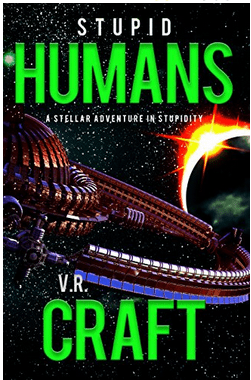
stupid-humans-coverThe next indie novel I’m reviewing here is Stupid Humans, by Vivian Cummings (using the pen name V.R. Craft). This is primarily a science fiction novel with strong overtones of satire and social critique.  The setting is sometime hundreds or thousands of years in the future, on a space station on the opposite side of a wormhole that has opened hear Earth. Despite the exotic location, the author carefully and cleverly included many familiar aspect of the real and present world, with a focus on the more obnoxious and, well, stupid aspects.

In this book’s backstory, the most intelligent humans on Earth fled the planet millennia ago in an event the rest of the world knew as the sinking of Atlantis. They established a spacefaring civilization and named themselves the People, in contrast to the stupid Humans who they left behind on Earth. The passage of time led to somewhat divergent evolution between the People and the Humans (for example, the People developed tails), and the People saw themselves as in every way superior to the Humans they’d left behind. The novel kicks off some years after a wormhole opens between Earth and the space station Five Alpha, where several thousand People live. The unexpected first contact leads to distrust, fear, political wrangling, business opportunities, and a war which the People’s public relations officials struggle to avoid calling a war. In this conflict we have doctors and politicians and beer moguls and regular Joes of both the Humans and the People all trying to find an unlikely stability.

The writing is very good, the pacing was good, and I thought the story overall was very clever and original. It had many familiar elements to it (in some ways it seemed to take the concept behind the movie Idiocracy and invert the premise) but was very fresh as an independent sci-fi work. There were some small typos throughout the story, but they weren’t concentrated anywhere and they weren’t enough to be distracting. The characters were complex, the dialogue and interactions were quite believable, and there were several legitimately funny bits of comedy throughout the novel.

There was one area where the book had some weakness though. It had quite a lot of characters who were difficult to keep track of, and the character who fell into the protagonist’s role is deliberately mysterious about her motives and backstory. I’m referring to Samantha, a Human bartender and reporter who ends up on Five Alpha and is subject to scrutiny by People who are suspicious of her desire to stay on the station. The question of her motive isn’t answered until the very end of the book, and this crucial aspect of Samantha’s personality prevents the reader from developing a very strong connection with the character.

That being said, Stupid Humans  is an intelligent and high-quality work of science fiction, a caliber above many other sci-fi novels that I’ve read. I would definitely recommend it to fans of the genre, and to fans of humor and satire.

Now as always, my bit of promo. If you liked this book review, you can see my others here: New Book Review 1New Book Review 2New Book Review 3New Book Review 4New Book Review 5New Book Review 6New Book Review 7New Book Review 8New Book Review 9New Book Review 10New Book Review 11New Book Review 12New Book Review 13New Book Review 14New Book Review 15New Book Review 16New Book Review 17New Book Review 18New Book Review 19New Book Review 20New Book Review 21

If you are a fan of fantasy, you can look into my own book, Tales of Cynings Volume I, in print format here or Kindle format here.

This post was originally featured on cwbookclub.com.
New Book Review 21: Murder in Absentia

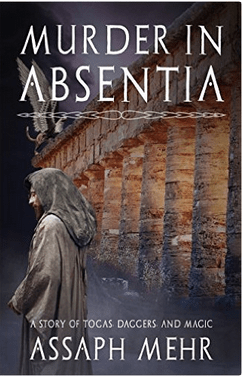
murder-in-absentiaThe next book I’ll review is Assaph Mehr’s novel Murder in Absentia. This book is a mystery set a fantasy world modeled very closely on the real-world Roman Empire, with the addition of mythological beasts and magic to add Fantasy to the book’s genre. It’s the first of the series Felix the Fox, named for the protagonist. As this book was of exceptional quality, I’m looking forward to the next in the series.

Felix the Fox, as he is professionally known, is a detective. He’s trained in the past as a soldier and as an incantator (the equivalent to a wizard in this world), but his profession is solving cases for high-profile citizens of Egretia, the quasi-Roman society of this book. When the son of a wealthy and influential merchant dies under strange and supernatural circumstances, Felix takes a contract to discover the cause of the young man’s death. This investigation brings Felix into the midst of a dangerous conspiracy of wicked incantatores in which any mistake could cost him his life. Despite his exotic setting Felix is not so different from other detective characters I’ve read. He’s intelligent and resourceful, he’s very disciplined about his work, and he has his own set of insecurities and vices. The supporting characters include his nearly-mad friend and informant Abraxus, the tough barbarian Borax who serves as his bodyguard, his cheeky housekeeper Dascha, and the various soldiers, incantatores, prostitutes, and other residents of Egretia who help or hinder him on his search. Most of these characters were conveyed very well, though I was a little disappointed that there weren’t a lot of female characters serving a purpose beyond romance or sex (Dascha being the exception).

The strongest aspect of the story was its setting. As I’ve said, Egretia is a fantasy version of Rome, and the writing makes it clear that the author worked carefully to keep his details authentic. We’re used to seeing fantasy novels modeled on a modern misunderstanding of the Middle Ages (my own work is done this way, I’m afraid), but this setting was something different. It was extremely detailed, from the social ranks of the characters to the military techniques of the nation to the way food is prepared. No detail was overlooked, and this made the setting incredibly rich and immersive. The flip side to this is that on occasion the details were excessive. I personally found them interesting, but they didn’t always advance the story. The fantasy side of this, the way magic works in this fictional world, was also meticulously detailed and specific. It relied closely on priestly rituals like the real Rome had rather than the wand-waving staff-wielding spectacle we’ve come to expect from 21st-century fantasy. This felt consistent with the setting, and was nicely believable.

There was only one place where this magic technique deviated, and this deviation is one of the book’s weaknesses. I don’t want to say much on it to avoid spoilers, but in the book’s climax the magic style changes for the more modern and more spectacle-driven, and I don’t think the change was necessary. I’d rather it kept the magic consistent throughout. This wasn’t the only issue I had with the climax. I also felt that it came a bit too suddenly, involving some major plot points that hadn’t had much lead-up prior to it. But, the book was of such high caliber that I’m not too bothered by this.

Fans of historical fiction will appreciate this book for its meticulous setting, fans of detective fiction will enjoy the carefully crafted mystery of the work, and fans of fantasy such as myself can take pleasure from this book’s new and unique type of fantasy world. With all of these styles working together so effectively, Murder in Absentia was a new type of reading experience for me, and I highly recommend it.

Now as always, my bit of promo. If you liked this book review, you can see my others here: New Book Review 1New Book Review 2New Book Review 3New Book Review 4New Book Review 5New Book Review 6New Book Review 7New Book Review 8New Book Review 9New Book Review 10New Book Review 11New Book Review 12New Book Review 13New Book Review 14New Book Review 15New Book Review 16New Book Review 17New Book Review 18New Book Review 19New Book Review 20

If you are a fan of fantasy, you can look into my own book, Tales of Cynings Volume I, in print format here or Kindle format here.

This post was originally featured on cwbookclub.com.

New Book Review 20: The Wounded World

the-wounded-world-coverThe twentieth book I’m reviewing on this blog is The Wounded World, the first of the Sagittan Chronicles science fiction series by Ariele Sieling. To be clear, the work is soft sci-fi rather than hard sci-fi, which means its story relies on entirely fictitious science. Its purpose is to entertain, not to anticipate or warn about the future or consequences of science.
The book’s characters inhabit a highly advanced society which has two important technologies that set it apart from Earth. The first is the Doors (try to set the night on fire!), portals which allow people to cross any distance from a single city block to all the way across the universe. The other technology is planetary construction. These people actually build planets, and Earth was one of their projects. Fans of Douglas Adams’s books will find this idea quite familiar. These two technologies are crucial to the story’s plot. Our hero, a soldier and all-around tough guy named Quin Black, spends the story travelling through dozens of Doors in search of his father, Grise Black, who has nefarious plans involving unauthorized planetary construction. Quin is accompanied by his close friend John, who is a genius mathematician. The mathematics of planet construction and teleportation are never explained, but John spends a lot of time working with numbers that only make sense to him. The book has a fair amount of comedy, much of which centers on this off-kilter friendship between Quin (the muscle) and John (the brain).

The story is for the most part a manhunt, and it’s written quite well. The prose was good, the sentences were both descriptive and concise and I don’t remember seeing typos or formatting errors anywhere. It had an adventure aspect to it as well, which for the most part was done well. As a sci-fi novel, I was pleased with The Wounded World.

That being said, there were some aspects that I thought could have been developed much more. The book was good, but it could have been better. Grise Black, the antagonist, was underdeveloped. I didn’t understand very well how his motives connected with his goals or why his troubled relationship with Quin was the way it was. Besides that, the fact that this story’s setting is a society that actually created and monitors the planet Earth had so much untapped potential. For the first dozen pages of the book, I thought the setting was actually a futuristic Earth. When the setting is revealed, it’s in an offhand joke that John makes rather than in any kind of shocking grand reveal. These people, from a human standpoint, could be considered gods. Yet they have the same social ranks, the occupations, and even the same animals that are found on Earth. Having them more discernably alien, and having them bear some kind of burden over the conduct of Earth, could have been interesting to see. I’m imagining something like Theodore Sturgeon’s short story ‘The Microcosmic God’, or more contemporarily the Rick and Morty episode ‘The Ricks Must Be Crazy’. The Wounded World is the first of a series, so perhaps these themes are explored more in the other books.

The novel was clear of any sexual content or any strong graphic violence, so I’d say it’s appropriate for teens and young adults, though adultier adults may enjoy it as well. I’d recommend it for sci-fi fans and fans of adventure stories. Personally I enjoyed it, though I think it had some untapped potential.

Now as always, my bit of promo. If you liked this book review, you can see my others here: New Book Review 1New Book Review 2New Book Review 3New Book Review 4New Book Review 5New Book Review 6New Book Review 7New Book Review 8New Book Review 9New Book Review 10New Book Review 11New Book Review 12New Book Review 13New Book Review 14New Book Review 15New Book Review 16New Book Review 17New Book Review 18New Book Review 19.

If you are a fan of fantasy, you can look into my own book, Tales of Cynings Volume I, in print format here or Kindle format here.

This post was originally featured on cwbookclub.com.

New Book Review 19: Secret of the Seven

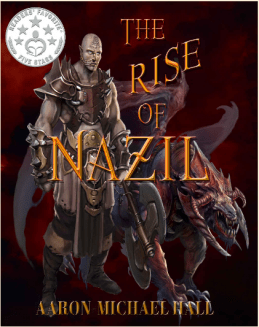
rise-of-nazil-1The nineteenth book I’m reviewing is Secret of the Seven, the first novel in the series ‘The Rise of Nazil’ by Aaron-Michael Hall. The novel is for the most part high/epic fantasy, with strong overtones of dark fantasy.  On that point, I should give a trigger warning on this review. The book contains a significant amount of rape and sexual violence, and I will speak on that content in this review. Readers who have had traumatic experiences or who are sensitive to those topics may wish to abstain from reading.

In this novel, humans are subject to rule by a race of people called Nazilians, whose capital is the city of Nazil. Nazilian society has ideology close to real-world fascism. They worship of gods embodying War, Power, Courage, and Judgment, and they obsess over racial purity. To them humans are inferior and anyone of mixed human and Nazilian blood is considered an abomination. Many Nazilians are sadistic and use terror as a way to maintain their power. Far from Nazil is the secret city of Bandari, where humans and Nazilians live in peace and harmony. One of the books central characters is Pentanimir, a Nazilian of the rank First Chosen (something like an elite military champion) who falls in love with a human woman, Brahanu. The two characters’ love is one of many pieces in the shifting dynamics of this land, which is moving toward a tipping point past which the cruel reign of Nazil cannot survive. Other pieces include the plotting of the giant Dessalonians who live on the edges of the map, and the awakening of god-like beings called Guardians (the titular Seven) who have their own plans for this world.

Apart from the occasional prophecy, there isn’t much of what we’d call magic in the story until near the end. The world is more closely related to the grit and cruelty that our own societies had during the Middle Ages. The story is strong and engaging, although it has some flaws. It moves along fairly slowly for the first two-thirds or so, setting up the pieces that bring it all to a grand climax in the last third of the book. Much of the time spent setting things up in the first two-thirds was spent on developing the romances between various characters. I’m not opposed to romance stories per se, but in this story they did slow things down quite a lot and I thought much of that aspect could have been shortened. One other aspect that I thought could have been shortened, that of sexual violence, calls for its own paragraph.

Now, I’ve read all five books in George R.R. Martin’s A Song of Ice and Fire (and I am waiting, respectfully and patiently, for The Winds of Winter). That series has gotten criticism for the amount of sexual violence in it. Secret of the Seven has more sexual violence in its 500-odd pages than A Song of Ice and Fire has in its 5,000-odd pages. It’s not left to implication and it’s not left to the imagination. It’s there, on the page, described in graphic and gruesome detail. Slaves of the Nazilians are descriptively raped, repeatedly. Captured enemies are treated to imaginative and meticulously-recounted tortures of sexual nature for dozens and dozens of pages. Every time you think the last of these scenes has passed, another one surprises you. Despite the book’s other strengths, I found this to be in poor taste.  There were times when I strongly considered putting the book aside due to these scenes, but I kept on because I was invested in the characters. So, readers who cannot stomach those kinds of scenes would do well to stay away from this book.

The prose was good for the most part, though there were typos and a handful of parts that could have used a little more editing. However as I said before, the story was good, a strong addition to the fantasy genre. I know there are two others in the series right now, Seed of Scorn and Piercing the Darkness. I will most likely read the former in a few weeks, and if it’s good I’ll go on to the latter. Fans of epic fantasy who are not too put off by gruesome graphicness will probably enjoy this book.

Now as always, my bit of promo. If you liked this book review, you can see my others here: New Book Review 1New Book Review 2New Book Review 3New Book Review 4New Book Review 5New Book Review 6New Book Review 7New Book Review 8New Book Review 9New Book Review 10New Book Review 11New Book Review 12New Book Review 13New Book Review 14New Book Review 15New Book Review 16New Book Review 17New Book Review 18.

If you are a fan of fantasy, you can look into my own book, Tales of Cynings Volume I, in print format here or Kindle format here.


New Book Review 18: Cloud Country

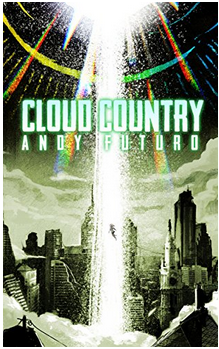
cloud-country The eighteenth book I’ll review here is Cloud Country, the second part of the Special Sin series by Andy Futuro. I reviewed the first book, No Dogs in Philly, in a previous blog post that you can read here. The series is a mix of cyberpunk, noir, dark fantasy, and Lovecraftian horror and follows a detective named Saru, a woman who fights crime in a gritty alternative version of Philadelphia. Her world includes brain-implanted internet streams, feuding cults, stray zombie-like creatures called elzi, and most importantly the conflicts between rival alien gods who see humans in a way much like humans see microbial cells. The story starts with her in the center of the devastation wrought by the events of the previous book and takes her through a new series of dangers, exploits, and revelations.

The first book was really fast-paced, and in comparison this second one is pretty slow. It centers on Saru and a Gaesporan (a member of the hive-mind-ish social elite) named John, and a lot of pagetime is spent explaining mysteries that came up in the first book and explaining the rules of this world. In the first book the supernatural implications of the events were initially unknown and Saru uncovered them little by little. Here we receive long detailed explanations of how things are and why they are the way they are. It was a bit heavy on exposition because of this. John knows the answers to all of Saru’s questions, and he explains these answers in long stretches of dialogue. The moments of action were fewer and more spaced out than in the first, but this didn’t bother me. I expect that at least one more book in the series is forthcoming, and it will benefit from having the world laid out more clearly.

One of this work’s main strengths is Saru’s narrative voice. She’s an extreme character, but she is consistent in her extremeness and her voice and attitude fits her personality. Here we see her less as a fighter and detective and more as a lost and fugitive young woman, a facet of her personality which existed in the first book but took a backseat to her hard-boiled-detective shtick. We get to know her better here, we see more of her weaknesses and insecurities. This comes in a large part from her being removed from her comfort zone, that is to say the crime-ridden alt-reality Philadelphia. In this book she spends more time in differing places and trapped inside her own memories, which uproots her and sets her in a more abstract kind of world. Due to this, the crime aspect and the cyberpunk aspect of the first book are largely discarded.

At this time there isn’t a third book in the series, and I haven’t seen any announcements for one yet. Nonetheless, I expect that there will be a third, and I look forward to it. As I said before, I enjoy this series and I’d recommend it to others. Of course, it features mature themes and isn’t for children or especially sensitive readers. It’s horror, after all. If you pick up a book of horror fiction you know what you’re getting into.

Now as always, my bit of promo. If you liked this book review, you can see my others here: New Book Review 1New Book Review 2New Book Review 3New Book Review 4New Book Review 5New Book Review 6New Book Review 7New Book Review 8New Book Review 9New Book Review 10New Book Review 11New Book Review 12New Book Review 13New Book Review 14New Book Review 15New Book Review 16New Book Review 17

If you are a fan of fantasy, you can look into my own book, Tales of Cynings Volume I, in print format here or Kindle format here.

New Book Review 17: Demorn: City of Innocents

The seventeenth book I’m reviewing here is Demorn: City of Innocents, the second book of David Finn’s Asanti series. Back in June I read the first one, Demorn: Blade of Exile, and I reviewed it on the blog here. The first impressed me enough to continue to the second, and when the third in the series comes out later this year I intend to buy, read, and review it as well. The label I gave the first book seems true of the whole series, a cross-dimensional dark modern fantasy adventure. The first book was both manically entertaining and manically confusing, and this second book toned down the manic quality of the first to create a work that was a little slower-paced but much easier to follow.

To review, Demorn is a powerful fighter who’s been engaged in wild adventures across time and multiple versions of reality for several years. Her paths have crossed with various gods, monsters, aliens, cultists, historical figures (she was all buddy-buddy with Frank Sinatra for as long as that lasted), magical objects, and so forth. She’s seen the end of the universe and witnessed the destruction of her own homeworld, which makes her a bit of a nihilist. As a priestess of the Asanti religious order she is privy to a wide variety of spells and arcane information, and as the royal-blooded Princess of Swords she’s nearly impervious to physical harm. She’s also a huge fan of 1960s music, superhero comic books, and romantic trysts with other dimension-hopping women. Demorn spent a good chunk of the last book trapped in a dimension she calls The Graveyard, and in this book she is trying to put the pieces of her life together after escaping from The Graveyard. There are a wide variety of characters (though not nearly as many as in the first book), but most of the story centers on Demorn and a godlike man she calls the Tyrant, who is alternately her close confidant and her bitter enemy as she works to avert a semi-inevitable cross-dimensional cosmic apocalypse.

The vivid storytelling and highly texture detail of the first book, its strongest points, carried over into the second. Every punch and burn and shock is felt by the character and the reader. With the story slowed down and given a tighter focus, this book was much easier to understand than the first. The complexity of the universe Demorn inhabits was still a little over my head, but it felt less overwhelming than before. The important parts weren’t so hard to follow this time around. It also helped that Demorn didn’t spend nearly as much time jumping around between worlds in this book, so I had more time to get accustomed to her locations.

For its followability, I would say that I liked this one better than the first book and I have very little bad to say about it. There were a handful of typos in the last fifteen percent of the book, which was a little unusual considering that I didn’t spot any at all in the rest of the book, but that’s not so bad. As I said before, fans of fantasy, science fiction, sword-and-sorcery, and fast-paced action stories will most likely take pleasure from this book.

And now once again, the plug. If you liked this book review, you can see my others here: New Book Review 1New Book Review 2New Book Review 3New Book Review 4New Book Review 5New Book Review 6New Book Review 7New Book Review 8New Book Review 9New Book Review 10New Book Review 11New Book Review 12New Book Review 13New Book Review 14New Book Review 15New Book Review 16

If you are a fan of fantasy, you can look into my own book, Tales of Cynings Volume I, in print format here or Kindle format here.

New Book Review 16: Atomic Underworld: Part One

The sixteenth book I’m reviewing is Atomic Underworld: Part One by Jack Conner, the first of the ‘Atomic Underworld’ duology, which itself is a prequel to Jack Conner’s ‘Atomic Sea’ series. The book is billed as Lovecraftian steampunk fantasy, which is to say that it takes inspiration from the otherworldly horror stories of H.P. Lovecraft and the speculative alternative history of steampunk sci-fi. In its execution I would also add ‘noir’ or ‘mystery’ to the genre. It’s a good mix, and the various pieces work well together.

The story’s protagonist is Tavlin ‘Two-Bit’ Metzler, a professional gambler and general rouge living in the subterranean city of Muscud, on the banks of the Atomic Sea. This city is one of several underground cities primarily inhabited by mutated humans, but also inhabited by ordinary uninfected humans, mutated animals, and members of various sentient pre-human species (some rather slug-like, some blob-like, and some arthropod-like). These cities are in the sewers of the larger metropolises above ground, and their primary authorities are multiple religious cults and various rival gangs. When Tavlin’s old friend and full-time mob boss Vassas has several members of his gang die under strange circumstances, Tavlin is asked to investigate. His investigations put him in the middle of a dangerous adventure centering on a strange weapon which the cults and sentient pre-humans are all desperate to get their hands (or tentacles) on.

The best thing about this book was its incredible level of description and texture. Muscud and the cities near it are disgusting places. They’re slimy, they stink, everything is damp and crawling and infected, and the descriptions are written with skin-crawling vividness. All of the mutant creatures, all of the alien-like underworld denizens, were described excellently. The quality of the writing was also very good, with few errors. I did feel like the characters drew heavily from crime-drama clichés, but that’s not so terrible. These kinds of characters are used because they’re effective. Maybe we’ve all seen movies with some fedora-wearing cigar-chomping pistol-waving mob boss shouting profanities before, but that doesn’t diminish the character’s entertainment value.

The book was heavy on action, with chases and gunfights familiar to anyone who’s read or watched any kind of mystery or crime dramas. The difference of course is that these fights are here taking place in a slimy underground city, which allows for some different approaches. The fights were well-written as well, however due to the way the story uses them, I would dispute the book’s Lovecraftian label. In a Lovecraft story, there is always a sort of creeping dread pervading the narrative. The characters in a Lovecraft story are victims of hellish otherworldly forces gradually driving them into unspeakable terror and insanity through the influence of eldritch alien gods. In Atomic Underworld, there are (or at least seem to be) eldritch alien gods , and there is dread, but the dread doesn’t pervade the narrative. The book doesn’t feel like a horror story. With a cocky rogue for a protagonist and with mobsters out of a 1940s noir film chasing each other through an urban jungle, the book feels more like action/adventure than it does horror. This isn’t a bad thing, but it is worth noting. It’s also worth noting that this book ends on a complete cliffhanger, which may annoy some readers.

On the whole, I enjoyed it. The detail was impressive and the story was engaging, and the odds are good that I’ll buy and read the second part of it.

And now once again, the plug. If you liked this book review, you can see my others here: New Book Review 1New Book Review 2New Book Review 3New Book Review 4New Book Review 5New Book Review 6New Book Review 7New Book Review 8New Book Review 9New Book Review 10New Book Review 11New Book Review 12New Book Review 13New Book Review 14New Book Review 15

If you are a fan of fantasy, you can look into my own book, Tales of Cynings Volume I, in print format here or Kindle format here.

New Book Review 15: A Threat of Shadows

The fifteenth book I’m reviewing (geez, these things just keep going) is A Threat of Shadows, the first of the Keeper Chronicles series by J.A. Andrews. It’s another high fantasy novel, set in a medieval world populated by humans, dwarves, elves, dragons, wizards, and various mystical monsters. It also has the distinction of being, so far, the best indie novel I’ve read.

The protagonist’s hero and protagonist is Alaric, whose occupation as a Keeper enables him to have various magical abilities and a wide range of arcane knowledge. When Alaric’s wife Evangeline is bitten by a poisonous snake he embarks on a quest to find an antidote for her, which puts him in the path of a plot to resurrect a long-dead wizard of a wicked group called Shade Seekers.

In many ways the novel seems to follow several fantasy tropes that have been used to the point of cliché. Alaric is a quest in a traditional fantasy land, and he eventually becomes part of a traveling party with an old wizard, a gruff dwarf, an ethereal elf, a blacksmith, and a milkmaid. That trope, the diverse wandering fellowship, has been done many times before. However, without going too far into spoilers, this book turns the trope on its head in an unexpected and spectacular way. I’m always impressed by writers who can take the familiar aspects of a genre and do something new with them, and A Threat of Shadows does that especially well.

A major part of the book’s appeal for me was that it had a sense of wonder to it. I’ve noticed a trend with a lot of recent fantasy that the books sometimes take themselves very seriously. A Song of Ice and Fire, despite all that’s good about it, doesn’t have that sense of wonder. I don’t think the indie fantasy novels I’ve previously reviewed on this blog had it either. Books with a sense of wonder don’t try so hard to be gritty or realistic. They allow themselves to be playful, to do impossible things because impossible things are fun. The Harry Potter series is an especially prominent example of this. So is Piers Anthony’s A Spell for Chameleon of the Magic of Xanth series, but I strongly disliked that one for other reasons. Many fantasy novels written for children or young adults have that playfulness. I would not say that A Threat of Shadows is aimed at children or young adults (though it doesn’t have anything that would lead most parents to prohibit it), but it still has that playfulness and wonder.

A side-effect of that playfulness and wonder is that the characters occasionally benefited from having just a little too much luck in their quest (which, as the story progresses, shifts from healing Evangeline’s wife to preventing the return of the villainous wizard). In another book this might bother me, but in this case I’m okay with it.  The writing was also very good, mostly without any grammatical or formatting mistakes.

To wrap this up, I would definitely recommend this book to fans of fantasy. If you’re into anything from J.K. Rowling, J.R.R. Tolkien, George R.R. Martin, Terry Pratchett, and so on, you’ll most likely enjoy this book.

And now once again, the plug. If you liked this book review, you can see my others here: New Book Review 1New Book Review 2New Book Review 3New Book Review 4New Book Review 5New Book Review 6New Book Review 7New Book Review 8New Book Review 9New Book Review 10New Book Review 11New Book Review 12New Book Review 13New Book Review 14

If you are a fan of fantasy, you can look into my own book, Tales of Cynings Volume I, in print format here or Kindle format here.

New Book Review 14: Mercy for the Serpent

The fourteenth book I’m reviewing is Jaclyn Lewis’s novel Mercy for the Serpent. It’s billed on Amazon as science fiction, but by my reading it fits more closely with fantasy. The characters inhabit an Earth-like world called Trelisor, and their society is relatively primitive. This world has two factions locked in a centuries-old war, while a smaller faction called the Gleaners live in the jungles and deserts while survivor through thievery against the two main factions. Our protagonist is a young Gleaner named Phinehas (“the serpent”), a thief who unintentionally kills a man (Valahar) while stealing from him. The story’s plot centers on the consequences of this murder as Phinehas attempts to flee from the rigid justice of Valahar’s people, who include the victim’s wife Azira and brother Goeh’el.

The book is Christian-themed fiction, and this becomes clear fairly quickly. The conflict focuses on the decision by Valahar’s brother as to whether Phinehas should be justly executed for his crime, or whether he should be shown mercy. It’s difficult to review this book without giving away spoilers, but in the book Goeh’el chooses mercy and makes a plainly Christ-like sacrifice by choosing to be executed in Phinehas’s place. As the rest of the book goes, the rest of Valahar’s people must cope with this unusual decision while Phinehas must learn to live with his pardon.

The writing is quite beautiful. There are lots of vivid descriptions and flowery poetic language, which was initially was a little off-putting for me. Once I was further in and better adjusted to the writing style, it didn’t bother me. The fictional society was also very believable, which I appreciated.

I’ve had some issues with Christian fiction in the past, because I’ve seen a lot of it done badly. Often it is essentially a sermon disguised as a story, and the quality of the narrative suffers because the characters and events are secondary to the message. Christian fiction that avoids this pitfall can achieve great things. I consider C.S. Lewis’s Space Trilogy a good example of this, and some books of his Chronicles of Narnia are also good examples (not all are, but some are). Mercy for the Serpent, as a work of Christian fiction, avoids that pitfall for most of the book. Phinehas, Goeh’el, and Azira are characters with personalities and desires apart from just being characters in a sermon. When they are well-written, they are very well-written. That being said, towards the end of the book this pitfall became more prominent. I had the feeling that the author wanted to cram in as many Biblical allusions and references as possible (the Good Samaritan, Jesus washing the feet of the disciples, the divine name I Am Who I Am), and they didn’t all fit so well. The message of the book was strong, but many of the Biblical references felt like they were put in just for the sake of having Biblical references instead of because they contributed to the narrative.

Overall, I liked the book. The prose is very good and the setting is memorable, and it had a central theme that I certainly recognize and agree with. It was heavy-handed with its theme, but not enough to seriously detract from the book’s quality. I can certainly recommend it for Christian readers and fans of C.S. Lewis or Madeleine L’engle. It was appropriate for younger readers as well, so parents could suggest it to their children as well.

And now as always, the plug. If you liked this book review, you can see my others here:

New Book Review 1New Book Review 2New Book Review 3New Book Review 4

New Book Review 5New Book Review 6New Book Review 7New Book Review 8New Book Review 9New Book Review 10New Book Review 11New Book Review 12New Book Review 13

If you are a fan of fantasy, you can look into my own book, Tales of Cynings Volume I, in print format here or Kindle format here.

New Book Review 13: A Spell in the Country

The thirteenth book I’m reviewing is Morgan Smith’s A Spell in the Country, a novel of the high fantasy series The Averraine Cycle. It’s written in first person and is stylistically similar to Robert Jordan’s The Wheel of Time series or George R.R. Martin’s A Song of Ice and Fire series, though much smaller in scope and ambition.

The narrative follows Keridwen, a soldier and a young woman in the army of Keraine, a land caught in a long and arduous war against the neighboring land of Camrhys. Keridwen—or Keri, as she is more often called—is a tough and capable soldier, initially accused of treason against the kingdom but permitted to return to service at the backwater stronghold of Penvarron. While in Penvarron, Keri gets caught up in a sorcerous conspiracy against Keraine. She finds herself being used as a pawn in the power struggle between those loyal to Keraine and those covertly working for Camrhys, a struggle that gains supernatural aspects.

The writing excels in this novel. Keri’s voice and perspective comes through strongly, and while the pace is fairly slow, she is an engaging and believable-enough character to hold the reader’s interest throughout the book. The greatest strength to this book was its level of detail. The writing doesn’t gloss over the challenges of being a medieval soldier. It’s specific, and it’s gritty, and I must confess that I felt a little bit of envy toward the author for conveying that world more convincingly than I have in my own work. Morgan Smith seems to have done her research exceptionally well, and I commend her for that. The worldbuilding was also impressive for me, not because it was especially complex but because it was believable. The world of the story is very close to the real one. This isn’t fantasy with elves and dwarves and orcs and magic wands, instead it’s a credible medieval world in which magic exists in small subtle ways, primarily feared by the common people. The magic and ritual of the world is at odds with the official religion of the population (led by priests who worship a goddess), which also impressed me with its proximity to the way that belief in magic and ritual is at odds with authoritative beliefs in the real world. The book also handles suspense very well. Without giving away any spoilers, there is a lengthy section of the novel in which an unknown antagonist is murdering Penvarron soldiers and Keri must try to work out who it is, and the way suspense and fear were conveyed in that section was outstanding.

I did say that the pace is slow, and that’s worth considering if you favor fast action-packed fantasy novels. I would not say that the book is boring at all, but it’s not a thriller. It takes some patience and dedication from the reader to see it all through to the end. That being said, there was hardly anything wrong with it, and I quite enjoyed it. I’d definitely recommend it for fans of medieval fantasy and high fantasy.

And now as always, the plug. If you liked this book review, you can see my others here:

New Book Review 1New Book Review 2New Book Review 3New Book Review 4

New Book Review 5New Book Review 6New Book Review 7New Book Review 8New Book Review 9New Book Review 10New Book Review 11New Book Review 12

If you are a fan of fantasy, you can look into my own book, Tales of Cynings Volume I, in print format here or Kindle format here.