New Book Review 40: Gods of the Mountain

gods of the mountainI’ve been keeping fairly quiet on social media for a while lately, and as an author I’ve been effectively silent for several months. However, I’m still reading plenty and I’m still writing plenty, though not as much as I should be. Any writer would tell you the same, I think. None of us write quite as much as we want to, or we should.

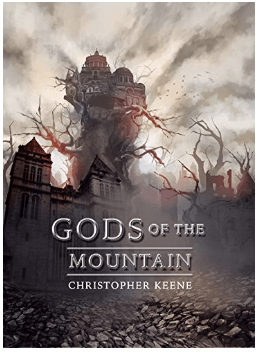
At any rate, what I’m posting here today is the fortieth indie book review on this blog, for the fantasy novel Gods of the Mountain by Christopher Keene, the first (and so far only) book of the Cycle of Blades series. I hope to get a few more reviews here during 2018, but I can’t make any promises right now.

Gods of the Mountain is set in an essentially medieval world, like most fantasy, though there are no magical races or classic mythical creatures here. The setting is the repressive Avaani Empire, where most of our characters live in the major city of Tyria. Near Tyria is the  eponymous mountain, where a religious sect of magic practitioners called the Lunari worship entities called the Ksai, whom they understand as the source of their magical powers. The Lunari are able to use symbols which they hold in their minds to endow themselves with comic-book-like abilities such as flight, strength, speed, teleportation, and others. The Avaani people distrust the Lunari, and the Lunari view the Avaani as a race of godless ignorant blasphemers.

As the action picks up, an Avaani assassin and mercenary named Kessler appears wielding Lunari powers in a quest for revenge against the empire. He is manipulated from the shadows by a mysterious renegade Lunari, and part of his plan is to train up other outlaws in Lunari magic to join him in his quest. Our protagonist is Faulk, an Avaani soldier-turned-mercenary who is unwillingly trained by Kessler and soon becomes a fugitive of the Avaani law enforcement, embodied in the sadistic High Inquisitor Mullen, a bloodthirsty and crafty man who excels in torture and other unkind practices. When the antics of these rogue magic-users attracts the attention of the Lunari, a pair of Lunari come down from the mountain to rein them in, and in the process attempt to recruit Faulk into their sect. Being a godless Avaani, Faulk is skeptical of their tales of Ksai and devotion and heresy. As these and other events unfold, there are revelations and plots and schemes in the world of humans and the world of gods, culminating in an explosive climax.

Gods of the Mountain had its share of strengths and weaknesses. It had an original plot and some new ideas that I hadn’t seen in fantasy before. The way magic worked was entirely its own, although it reminded me some of the novel Elantris by Brandon Sanderson, and I saw that Keene listed Sanderson as one of his influences, so this is not too surprising. The book does well with heightening mystery and intrigue throughout, and in fact we don’t learn the villain’s identity and motivation until near the very end of the novel. One weakness of the book was the indistinct personalities of the some of the characters. A few of the more important characters spoke and acted essentially the same, and that diminished the reading experience some. The book ends on something of a cliffhanger, being the first book of a planned series. This didn’t bother me, but it might bother some readers. Being an adult fantasy novel, the book also has its share of violence, profanity, and sexual content, so more sensitive readers might want to avoid it for those reasons.

All in all, I enjoyed the book and I’d be curious to see what else this author has out there. Fans of fantasy and people looking for books with less conventional plots are likely to appreciate Gods of the Mountain.

And now once again, my bit of advertisement. If you are a fan of fantasy, you can look into my own book, Tales of Cynings Volume I, in print format here or Kindle format here.

New Book Review 38: Casting in Stone

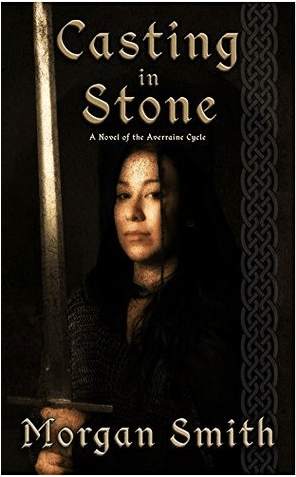
casting in stoneThis is the first new review I’ve done since September. Working as a substitute teacher and maintaining a handful of other jobs have taken up a fair amount of my time, so I haven’t been writing as much or supporting other indie authors as much as I should. That’s not a great excuse, and I mean to do better in the near future.  Now, this latest review (number thirty-eight) is on Morgan Smith’s Casting in Stone. Way back in August 2016 I reviewed Smith’s A Spell in the Country, which is one of the best indie fantasy novels I’ve come across. You can read that review here. Both of these books are in Smith’s high fantasy series The Averraine Cycle, taking place in the same world and referencing some of the same locations and history, but not sharing characters or plot points.

Like A Spell in the Country, Casting in Stone is told from the first person point of view of a tough and fierce warrior, a woman in a medieval-esque land of castles, knights, and dangerous magic. Our hero is Caoimhe, an orphan with notoriously ill luck and a penchant for killing. In a flashback we learn that she served as champion for a young duke named Einon during a period of power struggle and court intrigue in the town of Rhwyn. There were a lot of court intrigues in the story, and I regret to say that I couldn’t very well keep up with all of them. The main story was centered on Caoimhe’s investigation into a curse that she believes has been plaguing her, and the ways that the people around her manipulate her to keep her ignorant of the curse or help guide her to discovering the source of the curse.

There’s some action in the story: descriptions of one-on-one battles between champions, descriptions of skirmishes against feral supernatural wolves, battle against wicked supernatural entities. With the descriptions of fighting and the daily routines of being a soldier in this kind of grim pre-industrial fantasy world, the author spares no detail. The weapons and processes and fighting techniques are elaborated in a way that reveals how much time Smith researched her source material, creating a very believable setting. This was the case in A Spell in the Country as well, and I’m again impressed and inspired by it. In my own fantasy work, I would do well to imitate that commitment to research. That being said, there were long stretches of the book where things moved slowly, and where I really wanted to see more things happening. Where the story was interesting, it was great, but there were stretches when it dragged on.

As someone who appreciates quality high fantasy, I definitely appreciated this book, and I think other fans of the genre will appreciate it as well. I’m keeping an eye out for other works in The Averraine Cycle.

Now, once again, my bit of promo. If you are a fan of fantasy, you can look into my own book, Tales of Cynings Volume I, in print format here or Kindle format here.

New Book Review 27: Atomic Underworld: Part Two

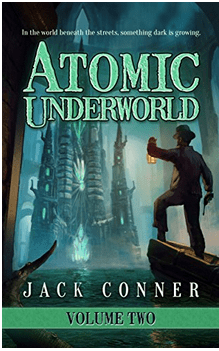
atomic-underworld-2-coverThe twenty-seventh book I’m reviewing here is Atomic Underworld: Volume Two, by Jack Conner. This book is the sequel to one I reviewed a few months ago, Atomic Underworld: Part One. That review may be read here. Within the same world this author also has the Atomic Sea series and the books Nightmare City and City of Shadows.

A quick recap of the setting: the story takes place in and around the subterranean city of Muscud, which sits over the highly toxic Atomic Sea. In this alternate world technology has developed in a steampunk-like direction, and humans share the city with various pre-human alien species and with humans afflicted by the mutating effects of the sea. Rival gangs hold the most power in the city, but power also belongs to the cultists who worship various otherworldly gods. In the last book, our hero Tavlin “Two-Bit” Metzler, a gambler and thief and all-around rogue, was captured by cultists and brought to the temple of their god, Magoth. This second part to the story begins with Tavlin’s captivity and brainwashing in their temple. Other characters working with and against Tavlin include his ex-wife Sofia, friend and brutal mob boss Vassas, rival mob boss and cultist Havictus, the cult leader known only as the Lady, and a ghostly woman of ambiguous allegiance named Millicent.

As noted in the review of the previous book, the strongest feature of these books (probably of all Conner’s work) is the detail. The stinking, toxic, moist underworld that he paints feels stinky and toxic and moist. The description is vivid and graphic, and I really appreciated that. The characters are in some ways a little cookie-cutter (Boss Vassas is every cigar-chomping mob boss ever, Tavlin is right out of the Han Solo/Jack Sparrow/Malcolm Reynolds school for likable outlaws, all of the gangsters are noir characters with superficial mutations), but they’re fun anyway. Now, as I said, I read the previous book a few months ago, so I generally remembered who the characters are, good guys and bad guys and whatnot, but I couldn’t really remember which slimy jiggly pre-human alien race was which, and the sequel didn’t really take any time to recap those details. The story goes straight forward where the last book ended, with no recaps at all. For this reason, I wonder why the two books are in separate volumes at all. I’m aware that the author also released an Omnibus Edition with both books included, but why not just have them together as one novel? I can guess, but I prefer not to be cynical and to instead hope that the reason was creative.

For anyone who wishes to read these stories, the genre needs to be well understood. These are pulpy action stories. They take some inspiration from the horror tales of H.P. Lovecraft, but they are not horror. The purpose of these stories is to entertain, and in that capacity they deliver. A small advisory warning: the book contains a lot of graphic violence, some references to rape, and one descriptive sex scene. Some more sensitive readers might be put off by these features, though I personally was not. I found both of these books fully entertaining, and I expect if I read other work by this author I will encounter the same. The conclusion especially, the climactic fight scene that resolved the story, was especially satisfying. Fans of action and crime stories, dark fantasy, and horror/pulp fiction are the recommended audience for these books. As a fan of science fiction and fantasy, I loved them.

Now, once again, my bit of promo. If you are a fan of fantasy, you can look into my own book, Tales of Cynings Volume I, in print format here or Kindle format here.
This post was originally featured on cwbookclub.com.

New Book Review 21: Murder in Absentia

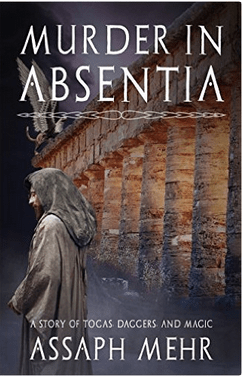
murder-in-absentiaThe next book I’ll review is Assaph Mehr’s novel Murder in Absentia. This book is a mystery set a fantasy world modeled very closely on the real-world Roman Empire, with the addition of mythological beasts and magic to add Fantasy to the book’s genre. It’s the first of the series Felix the Fox, named for the protagonist. As this book was of exceptional quality, I’m looking forward to the next in the series.

Felix the Fox, as he is professionally known, is a detective. He’s trained in the past as a soldier and as an incantator (the equivalent to a wizard in this world), but his profession is solving cases for high-profile citizens of Egretia, the quasi-Roman society of this book. When the son of a wealthy and influential merchant dies under strange and supernatural circumstances, Felix takes a contract to discover the cause of the young man’s death. This investigation brings Felix into the midst of a dangerous conspiracy of wicked incantatores in which any mistake could cost him his life. Despite his exotic setting Felix is not so different from other detective characters I’ve read. He’s intelligent and resourceful, he’s very disciplined about his work, and he has his own set of insecurities and vices. The supporting characters include his nearly-mad friend and informant Abraxus, the tough barbarian Borax who serves as his bodyguard, his cheeky housekeeper Dascha, and the various soldiers, incantatores, prostitutes, and other residents of Egretia who help or hinder him on his search. Most of these characters were conveyed very well, though I was a little disappointed that there weren’t a lot of female characters serving a purpose beyond romance or sex (Dascha being the exception).

The strongest aspect of the story was its setting. As I’ve said, Egretia is a fantasy version of Rome, and the writing makes it clear that the author worked carefully to keep his details authentic. We’re used to seeing fantasy novels modeled on a modern misunderstanding of the Middle Ages (my own work is done this way, I’m afraid), but this setting was something different. It was extremely detailed, from the social ranks of the characters to the military techniques of the nation to the way food is prepared. No detail was overlooked, and this made the setting incredibly rich and immersive. The flip side to this is that on occasion the details were excessive. I personally found them interesting, but they didn’t always advance the story. The fantasy side of this, the way magic works in this fictional world, was also meticulously detailed and specific. It relied closely on priestly rituals like the real Rome had rather than the wand-waving staff-wielding spectacle we’ve come to expect from 21st-century fantasy. This felt consistent with the setting, and was nicely believable.

There was only one place where this magic technique deviated, and this deviation is one of the book’s weaknesses. I don’t want to say much on it to avoid spoilers, but in the book’s climax the magic style changes for the more modern and more spectacle-driven, and I don’t think the change was necessary. I’d rather it kept the magic consistent throughout. This wasn’t the only issue I had with the climax. I also felt that it came a bit too suddenly, involving some major plot points that hadn’t had much lead-up prior to it. But, the book was of such high caliber that I’m not too bothered by this.

Fans of historical fiction will appreciate this book for its meticulous setting, fans of detective fiction will enjoy the carefully crafted mystery of the work, and fans of fantasy such as myself can take pleasure from this book’s new and unique type of fantasy world. With all of these styles working together so effectively, Murder in Absentia was a new type of reading experience for me, and I highly recommend it.

Now as always, my bit of promo. If you liked this book review, you can see my others here: New Book Review 1New Book Review 2New Book Review 3New Book Review 4New Book Review 5New Book Review 6New Book Review 7New Book Review 8New Book Review 9New Book Review 10New Book Review 11New Book Review 12New Book Review 13New Book Review 14New Book Review 15New Book Review 16New Book Review 17New Book Review 18New Book Review 19New Book Review 20

If you are a fan of fantasy, you can look into my own book, Tales of Cynings Volume I, in print format here or Kindle format here.

This post was originally featured on cwbookclub.com.

New Book Review 20: The Wounded World

the-wounded-world-coverThe twentieth book I’m reviewing on this blog is The Wounded World, the first of the Sagittan Chronicles science fiction series by Ariele Sieling. To be clear, the work is soft sci-fi rather than hard sci-fi, which means its story relies on entirely fictitious science. Its purpose is to entertain, not to anticipate or warn about the future or consequences of science.

The book’s characters inhabit a highly advanced society which has two important technologies that set it apart from Earth. The first is the Doors (try to set the night on fire!), portals which allow people to cross any distance from a single city block to all the way across the universe. The other technology is planetary construction. These people actually build planets, and Earth was one of their projects. Fans of Douglas Adams’s books will find this idea quite familiar. These two technologies are crucial to the story’s plot. Our hero, a soldier and all-around tough guy named Quin Black, spends the story travelling through dozens of Doors in search of his father, Grise Black, who has nefarious plans involving unauthorized planetary construction. Quin is accompanied by his close friend John, who is a genius mathematician. The mathematics of planet construction and teleportation are never explained, but John spends a lot of time working with numbers that only make sense to him. The book has a fair amount of comedy, much of which centers on this off-kilter friendship between Quin (the muscle) and John (the brain).

The story is for the most part a manhunt, and it’s written quite well. The prose was good, the sentences were both descriptive and concise and I don’t remember seeing typos or formatting errors anywhere. It had an adventure aspect to it as well, which for the most part was done well. As a sci-fi novel, I was pleased with The Wounded World.

That being said, there were some aspects that I thought could have been developed much more. The book was good, but it could have been better. Grise Black, the antagonist, was underdeveloped. I didn’t understand very well how his motives connected with his goals or why his troubled relationship with Quin was the way it was. Besides that, the fact that this story’s setting is a society that actually created and monitors the planet Earth had so much untapped potential. For the first dozen pages of the book, I thought the setting was actually a futuristic Earth. When the setting is revealed, it’s in an offhand joke that John makes rather than in any kind of shocking grand reveal. These people, from a human standpoint, could be considered gods. Yet they have the same social ranks, the occupations, and even the same animals that are found on Earth. Having them more discernably alien, and having them bear some kind of burden over the conduct of Earth, could have been interesting to see. I’m imagining something like Theodore Sturgeon’s short story ‘The Microcosmic God’, or more contemporarily the Rick and Morty episode ‘The Ricks Must Be Crazy’. The Wounded World is the first of a series, so perhaps these themes are explored more in the other books.

The novel was clear of any sexual content or any strong graphic violence, so I’d say it’s appropriate for teens and young adults, though adultier adults may enjoy it as well. I’d recommend it for sci-fi fans and fans of adventure stories. Personally I enjoyed it, though I think it had some untapped potential.

Now as always, my bit of promo. If you liked this book review, you can see my others here: New Book Review 1New Book Review 2New Book Review 3New Book Review 4New Book Review 5New Book Review 6New Book Review 7New Book Review 8New Book Review 9New Book Review 10New Book Review 11New Book Review 12New Book Review 13New Book Review 14New Book Review 15New Book Review 16New Book Review 17New Book Review 18New Book Review 19.

If you are a fan of fantasy, you can look into my own book, Tales of Cynings Volume I, in print format here or Kindle format here.

This post was originally featured on cwbookclub.com.

New Book Review 16: Atomic Underworld: Part One

The sixteenth book I’m reviewing is Atomic Underworld: Part One by Jack Conner, the first of the ‘Atomic Underworld’ duology, which itself is a prequel to Jack Conner’s ‘Atomic Sea’ series. The book is billed as Lovecraftian steampunk fantasy, which is to say that it takes inspiration from the otherworldly horror stories of H.P. Lovecraft and the speculative alternative history of steampunk sci-fi. In its execution I would also add ‘noir’ or ‘mystery’ to the genre. It’s a good mix, and the various pieces work well together.

The story’s protagonist is Tavlin ‘Two-Bit’ Metzler, a professional gambler and general rouge living in the subterranean city of Muscud, on the banks of the Atomic Sea. This city is one of several underground cities primarily inhabited by mutated humans, but also inhabited by ordinary uninfected humans, mutated animals, and members of various sentient pre-human species (some rather slug-like, some blob-like, and some arthropod-like). These cities are in the sewers of the larger metropolises above ground, and their primary authorities are multiple religious cults and various rival gangs. When Tavlin’s old friend and full-time mob boss Vassas has several members of his gang die under strange circumstances, Tavlin is asked to investigate. His investigations put him in the middle of a dangerous adventure centering on a strange weapon which the cults and sentient pre-humans are all desperate to get their hands (or tentacles) on.

The best thing about this book was its incredible level of description and texture. Muscud and the cities near it are disgusting places. They’re slimy, they stink, everything is damp and crawling and infected, and the descriptions are written with skin-crawling vividness. All of the mutant creatures, all of the alien-like underworld denizens, were described excellently. The quality of the writing was also very good, with few errors. I did feel like the characters drew heavily from crime-drama clichés, but that’s not so terrible. These kinds of characters are used because they’re effective. Maybe we’ve all seen movies with some fedora-wearing cigar-chomping pistol-waving mob boss shouting profanities before, but that doesn’t diminish the character’s entertainment value.

The book was heavy on action, with chases and gunfights familiar to anyone who’s read or watched any kind of mystery or crime dramas. The difference of course is that these fights are here taking place in a slimy underground city, which allows for some different approaches. The fights were well-written as well, however due to the way the story uses them, I would dispute the book’s Lovecraftian label. In a Lovecraft story, there is always a sort of creeping dread pervading the narrative. The characters in a Lovecraft story are victims of hellish otherworldly forces gradually driving them into unspeakable terror and insanity through the influence of eldritch alien gods. In Atomic Underworld, there are (or at least seem to be) eldritch alien gods , and there is dread, but the dread doesn’t pervade the narrative. The book doesn’t feel like a horror story. With a cocky rogue for a protagonist and with mobsters out of a 1940s noir film chasing each other through an urban jungle, the book feels more like action/adventure than it does horror. This isn’t a bad thing, but it is worth noting. It’s also worth noting that this book ends on a complete cliffhanger, which may annoy some readers.

On the whole, I enjoyed it. The detail was impressive and the story was engaging, and the odds are good that I’ll buy and read the second part of it.

And now once again, the plug. If you liked this book review, you can see my others here: New Book Review 1New Book Review 2New Book Review 3New Book Review 4New Book Review 5New Book Review 6New Book Review 7New Book Review 8New Book Review 9New Book Review 10New Book Review 11New Book Review 12New Book Review 13New Book Review 14New Book Review 15

If you are a fan of fantasy, you can look into my own book, Tales of Cynings Volume I, in print format here or Kindle format here.

New Book Review 12: Dreamscape

The twelfth book I’m reviewing here is Jenna Whittaker’s standalone novel Dreamscape. It’s a work of fantasy, though it doesn’t quite fit into any fantasy sub-genre that I’m familiar with. I almost want to say that Whittaker has established an entirely new fantasy sub-genre with it, but I’ll need to see if there are many similar books before jumping to that conclusion.

In the story, god-like beings vie for power in an alternate dimension called the Dreamscape. The mortal world suffers for the struggles between the gods, with the god Watcher and his allies The Sisters serving on the side of good and the cyborg-goddess Machina opposing them. To check Machina’s power, the gods execute a plan to have one of their number, the god Keeper, born in the form of a human named Khalos. As a human, he has no memory of his divinity or his power, and the main narrative follows him as he tries to work out who he is and why he’s in his position. I find the premise absolutely fascinating. It alludes to a variety of mythic and religious figures going back for thousands of years (Jesus, Krishna, every demigod-figure) and leads the reader to imagine the confusion and pain that would come with such a role.

The world of the Dreamscape has fantasy elements both familiar and unique. The gods manifest their power in different forms there, magic is carried out through singing, and mighty black gryphons travel between the world of the gods and the world of humans as the need dictates. The world of the humans in the novel seemed for the most part to be medieval-ish, but really that wasn’t clear to me. There seemed to be some modern conventions in it, so it’s hard to say.

One reason it’s hard to say the precise nature of the world is the author’s particular style of writing. The story is slow. There’s not a ton of concrete description, instead we spent most of the story inside of Khalos’s head and experiencing the world through his confused thoughts as he processes the mysteries that he encounters. The two adjectives that best describe the slow style, in my opinion, are ‘contemplative’ and ‘dreamlike’. Fans of fast-paced action and razor-sharp dialogue probably won’t enjoy this style. Personally, I loved it. It was different, but it was never boring. It’s a stretch, but it brought to my mind some aspects of the style of W. Somerset Maugham.

One problem does arise from this style though, and it served as a detractor at certain points. When the story does call for action, its impact is lost. This is especially prominent near the end of the story. There is fighting and warfare, but the dreamlike style softens it a little too much.

Overall, the book is both strong and unique, and I enjoyed every minute I spent reading it. It’s unique to the point that I can’t say exactly who the best target audience would be, but patient and thoughtful readers who enjoy fantasy and mythology should take pleasure in it.

And now as always, the plug. If you liked this book review, you can see my others here:

New Book Review 1New Book Review 2New Book Review 3New Book Review 4

New Book Review 5New Book Review 6New Book Review 7New Book Review 8New Book Review 9New Book Review 10New Book Review 11

If you are a fan of fantasy, you can look into my own book, Tales of Cynings Volume I, in print format here or Kindle format here.


New Book Review 11: Obsidian Son

The next book I’m reviewing is Obsidian Son, the first book of the ‘Nate Temple’ series by Shayne Silvers. The books is billed as a supernatural thriller, but it was more of a modern/urban fantasy thriller with some overtones of detective drama and comedy. There were aspects of the book that I really loved, and some other aspects that I really hated.

But first, the premise. The protagonist, Nate Temple, is a tough, wisecracking, handsome bookstore owner whose parents owned a multi-billion-dollar tech company. He also happens to be a wizard. In this world there are wizards, werewolves, living gargoyles, the monsters and gods of Greek mythology (albeit quite a ways past their prime), and all kinds of magical shtuff. The story takes off shortly after Nate’s parents die under mysterious circumstances. Soon Nate’s bookstore is being attacked by strange incendiary women, Nate’s magical powers start going haywire, and everybody in town is in search of an ancient book about dragons. Nate’s investigations lead him into the thick of a plot by scheming, shape-shifting dragons to establish the Obsidian Son, a kind of dragon übermensch who will usher in an age of dragon world domination.

It’s a fun concept, made even more fun by the comedy delivered by the book. There’s great banter among characters and great wisecracks from our hero, but even apart from that the situations and scenarios in many cases are genuinely hilarious. Saying too much about them now would spoil the jokes for potential readers, but the jokes are definitely a strength. The action is written as it should be in a thriller. It’s fast, it’s vivid, the details are all there, it’s all working great. There’s only one thing about the action that doesn’t work so well: Nate Temple is so powerful that he never seems to be in any real danger. The reader never has to wonder if he’ll survive a fight. With his plot armor securely in place, the fights have a somewhat cartoonish quality to them. His absolute wealth also allows many problems to be resolved simply by throwing money at them. That’s not so bad though. It’s entertaining anyway. It bothered me a little that there really wasn’t really any character development in the book, but it’s a thriller. It’s entertainment. I can accept that.

There’s one big thing that did bother me about the book: the majority of female characters in the book served the primary purpose of being (to use Nate Temple’s term) “eye candy”. Every single female character has supermodel looks wear skintight clothing, when they wear clothes at all. The dragons vying for domination consist of a kingpin-like figure and his “harem” of females, all of whom appear as usually-naked supermodels when they are in human form. Nate Temple’s love interest (whom he doesn’t mind forgetting about when he’s ogling the other female characters) does literally nothing in the entire book except be sexy and serve as the love interest. The story could follow its exact same plot without her ever appearing. As far as I remember, the only exception to the every-woman-is-a-sex-deity rule was one elderly Christian secretary who was just in the story for one comedic scene in which she reprimands Nate for being too sinful. Now, I’m not about to try and be the moral arbiter of the genre. And, there’s nothing wrong with a character being attractive. But with the exception of the elderly Bible-thumper, every woman in the story has sexiness as their first and most defining characteristic. Their value to Nate starts with their sex appeal. It bothers me. As I said, the book is just entertainment. It’s not going for anything profound. Still, it bothers me, and I can certainly see it bothering other readers.

So, I can recommend this for fans of action and thriller novels, and for fans of modern fantasy, and for readers who live in the common ground between the two. The writing is not at all bad and I had a lot of fun reading it. I’d like to hope that if I read any of the author’s other books, I won’t find in them the same issues that I found in this one.

And now, the plug. If you liked this book review, you can see my others here:

New Book Review 1New Book Review 2New Book Review 3New Book Review 4

New Book Review 5New Book Review 6New Book Review 7New Book Review 8New Book Review 9 –New Book Review 10

If you are a fan of fantasy, you can look into my own book, Tales of Cynings Volume I, in print format here or Kindle format here.