New Book Review 20: The Wounded World

the-wounded-world-coverThe twentieth book I’m reviewing on this blog is The Wounded World, the first of the Sagittan Chronicles science fiction series by Ariele Sieling. To be clear, the work is soft sci-fi rather than hard sci-fi, which means its story relies on entirely fictitious science. Its purpose is to entertain, not to anticipate or warn about the future or consequences of science.

The book’s characters inhabit a highly advanced society which has two important technologies that set it apart from Earth. The first is the Doors (try to set the night on fire!), portals which allow people to cross any distance from a single city block to all the way across the universe. The other technology is planetary construction. These people actually build planets, and Earth was one of their projects. Fans of Douglas Adams’s books will find this idea quite familiar. These two technologies are crucial to the story’s plot. Our hero, a soldier and all-around tough guy named Quin Black, spends the story travelling through dozens of Doors in search of his father, Grise Black, who has nefarious plans involving unauthorized planetary construction. Quin is accompanied by his close friend John, who is a genius mathematician. The mathematics of planet construction and teleportation are never explained, but John spends a lot of time working with numbers that only make sense to him. The book has a fair amount of comedy, much of which centers on this off-kilter friendship between Quin (the muscle) and John (the brain).

The story is for the most part a manhunt, and it’s written quite well. The prose was good, the sentences were both descriptive and concise and I don’t remember seeing typos or formatting errors anywhere. It had an adventure aspect to it as well, which for the most part was done well. As a sci-fi novel, I was pleased with The Wounded World.

That being said, there were some aspects that I thought could have been developed much more. The book was good, but it could have been better. Grise Black, the antagonist, was underdeveloped. I didn’t understand very well how his motives connected with his goals or why his troubled relationship with Quin was the way it was. Besides that, the fact that this story’s setting is a society that actually created and monitors the planet Earth had so much untapped potential. For the first dozen pages of the book, I thought the setting was actually a futuristic Earth. When the setting is revealed, it’s in an offhand joke that John makes rather than in any kind of shocking grand reveal. These people, from a human standpoint, could be considered gods. Yet they have the same social ranks, the occupations, and even the same animals that are found on Earth. Having them more discernably alien, and having them bear some kind of burden over the conduct of Earth, could have been interesting to see. I’m imagining something like Theodore Sturgeon’s short story ‘The Microcosmic God’, or more contemporarily the Rick and Morty episode ‘The Ricks Must Be Crazy’. The Wounded World is the first of a series, so perhaps these themes are explored more in the other books.

The novel was clear of any sexual content or any strong graphic violence, so I’d say it’s appropriate for teens and young adults, though adultier adults may enjoy it as well. I’d recommend it for sci-fi fans and fans of adventure stories. Personally I enjoyed it, though I think it had some untapped potential.

Now as always, my bit of promo. If you liked this book review, you can see my others here: New Book Review 1New Book Review 2New Book Review 3New Book Review 4New Book Review 5New Book Review 6New Book Review 7New Book Review 8New Book Review 9New Book Review 10New Book Review 11New Book Review 12New Book Review 13New Book Review 14New Book Review 15New Book Review 16New Book Review 17New Book Review 18New Book Review 19.

If you are a fan of fantasy, you can look into my own book, Tales of Cynings Volume I, in print format here or Kindle format here.

This post was originally featured on cwbookclub.com.
New Book Review 18: Cloud Country

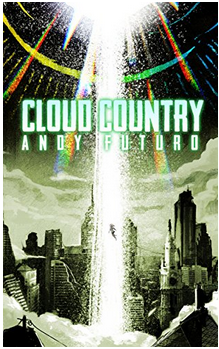
cloud-country The eighteenth book I’ll review here is Cloud Country, the second part of the Special Sin series by Andy Futuro. I reviewed the first book, No Dogs in Philly, in a previous blog post that you can read here. The series is a mix of cyberpunk, noir, dark fantasy, and Lovecraftian horror and follows a detective named Saru, a woman who fights crime in a gritty alternative version of Philadelphia. Her world includes brain-implanted internet streams, feuding cults, stray zombie-like creatures called elzi, and most importantly the conflicts between rival alien gods who see humans in a way much like humans see microbial cells. The story starts with her in the center of the devastation wrought by the events of the previous book and takes her through a new series of dangers, exploits, and revelations.

The first book was really fast-paced, and in comparison this second one is pretty slow. It centers on Saru and a Gaesporan (a member of the hive-mind-ish social elite) named John, and a lot of pagetime is spent explaining mysteries that came up in the first book and explaining the rules of this world. In the first book the supernatural implications of the events were initially unknown and Saru uncovered them little by little. Here we receive long detailed explanations of how things are and why they are the way they are. It was a bit heavy on exposition because of this. John knows the answers to all of Saru’s questions, and he explains these answers in long stretches of dialogue. The moments of action were fewer and more spaced out than in the first, but this didn’t bother me. I expect that at least one more book in the series is forthcoming, and it will benefit from having the world laid out more clearly.

One of this work’s main strengths is Saru’s narrative voice. She’s an extreme character, but she is consistent in her extremeness and her voice and attitude fits her personality. Here we see her less as a fighter and detective and more as a lost and fugitive young woman, a facet of her personality which existed in the first book but took a backseat to her hard-boiled-detective shtick. We get to know her better here, we see more of her weaknesses and insecurities. This comes in a large part from her being removed from her comfort zone, that is to say the crime-ridden alt-reality Philadelphia. In this book she spends more time in differing places and trapped inside her own memories, which uproots her and sets her in a more abstract kind of world. Due to this, the crime aspect and the cyberpunk aspect of the first book are largely discarded.

At this time there isn’t a third book in the series, and I haven’t seen any announcements for one yet. Nonetheless, I expect that there will be a third, and I look forward to it. As I said before, I enjoy this series and I’d recommend it to others. Of course, it features mature themes and isn’t for children or especially sensitive readers. It’s horror, after all. If you pick up a book of horror fiction you know what you’re getting into.

Now as always, my bit of promo. If you liked this book review, you can see my others here: New Book Review 1New Book Review 2New Book Review 3New Book Review 4New Book Review 5New Book Review 6New Book Review 7New Book Review 8New Book Review 9New Book Review 10New Book Review 11New Book Review 12New Book Review 13New Book Review 14New Book Review 15New Book Review 16New Book Review 17

If you are a fan of fantasy, you can look into my own book, Tales of Cynings Volume I, in print format here or Kindle format here.

New Book Review 17: Demorn: City of Innocents

The seventeenth book I’m reviewing here is Demorn: City of Innocents, the second book of David Finn’s Asanti series. Back in June I read the first one, Demorn: Blade of Exile, and I reviewed it on the blog here. The first impressed me enough to continue to the second, and when the third in the series comes out later this year I intend to buy, read, and review it as well. The label I gave the first book seems true of the whole series, a cross-dimensional dark modern fantasy adventure. The first book was both manically entertaining and manically confusing, and this second book toned down the manic quality of the first to create a work that was a little slower-paced but much easier to follow.

To review, Demorn is a powerful fighter who’s been engaged in wild adventures across time and multiple versions of reality for several years. Her paths have crossed with various gods, monsters, aliens, cultists, historical figures (she was all buddy-buddy with Frank Sinatra for as long as that lasted), magical objects, and so forth. She’s seen the end of the universe and witnessed the destruction of her own homeworld, which makes her a bit of a nihilist. As a priestess of the Asanti religious order she is privy to a wide variety of spells and arcane information, and as the royal-blooded Princess of Swords she’s nearly impervious to physical harm. She’s also a huge fan of 1960s music, superhero comic books, and romantic trysts with other dimension-hopping women. Demorn spent a good chunk of the last book trapped in a dimension she calls The Graveyard, and in this book she is trying to put the pieces of her life together after escaping from The Graveyard. There are a wide variety of characters (though not nearly as many as in the first book), but most of the story centers on Demorn and a godlike man she calls the Tyrant, who is alternately her close confidant and her bitter enemy as she works to avert a semi-inevitable cross-dimensional cosmic apocalypse.

The vivid storytelling and highly texture detail of the first book, its strongest points, carried over into the second. Every punch and burn and shock is felt by the character and the reader. With the story slowed down and given a tighter focus, this book was much easier to understand than the first. The complexity of the universe Demorn inhabits was still a little over my head, but it felt less overwhelming than before. The important parts weren’t so hard to follow this time around. It also helped that Demorn didn’t spend nearly as much time jumping around between worlds in this book, so I had more time to get accustomed to her locations.

For its followability, I would say that I liked this one better than the first book and I have very little bad to say about it. There were a handful of typos in the last fifteen percent of the book, which was a little unusual considering that I didn’t spot any at all in the rest of the book, but that’s not so bad. As I said before, fans of fantasy, science fiction, sword-and-sorcery, and fast-paced action stories will most likely take pleasure from this book.

And now once again, the plug. If you liked this book review, you can see my others here: New Book Review 1New Book Review 2New Book Review 3New Book Review 4New Book Review 5New Book Review 6New Book Review 7New Book Review 8New Book Review 9New Book Review 10New Book Review 11New Book Review 12New Book Review 13New Book Review 14New Book Review 15New Book Review 16

If you are a fan of fantasy, you can look into my own book, Tales of Cynings Volume I, in print format here or Kindle format here.

New Book Review 16: Atomic Underworld: Part One

The sixteenth book I’m reviewing is Atomic Underworld: Part One by Jack Conner, the first of the ‘Atomic Underworld’ duology, which itself is a prequel to Jack Conner’s ‘Atomic Sea’ series. The book is billed as Lovecraftian steampunk fantasy, which is to say that it takes inspiration from the otherworldly horror stories of H.P. Lovecraft and the speculative alternative history of steampunk sci-fi. In its execution I would also add ‘noir’ or ‘mystery’ to the genre. It’s a good mix, and the various pieces work well together.

The story’s protagonist is Tavlin ‘Two-Bit’ Metzler, a professional gambler and general rouge living in the subterranean city of Muscud, on the banks of the Atomic Sea. This city is one of several underground cities primarily inhabited by mutated humans, but also inhabited by ordinary uninfected humans, mutated animals, and members of various sentient pre-human species (some rather slug-like, some blob-like, and some arthropod-like). These cities are in the sewers of the larger metropolises above ground, and their primary authorities are multiple religious cults and various rival gangs. When Tavlin’s old friend and full-time mob boss Vassas has several members of his gang die under strange circumstances, Tavlin is asked to investigate. His investigations put him in the middle of a dangerous adventure centering on a strange weapon which the cults and sentient pre-humans are all desperate to get their hands (or tentacles) on.

The best thing about this book was its incredible level of description and texture. Muscud and the cities near it are disgusting places. They’re slimy, they stink, everything is damp and crawling and infected, and the descriptions are written with skin-crawling vividness. All of the mutant creatures, all of the alien-like underworld denizens, were described excellently. The quality of the writing was also very good, with few errors. I did feel like the characters drew heavily from crime-drama clichés, but that’s not so terrible. These kinds of characters are used because they’re effective. Maybe we’ve all seen movies with some fedora-wearing cigar-chomping pistol-waving mob boss shouting profanities before, but that doesn’t diminish the character’s entertainment value.

The book was heavy on action, with chases and gunfights familiar to anyone who’s read or watched any kind of mystery or crime dramas. The difference of course is that these fights are here taking place in a slimy underground city, which allows for some different approaches. The fights were well-written as well, however due to the way the story uses them, I would dispute the book’s Lovecraftian label. In a Lovecraft story, there is always a sort of creeping dread pervading the narrative. The characters in a Lovecraft story are victims of hellish otherworldly forces gradually driving them into unspeakable terror and insanity through the influence of eldritch alien gods. In Atomic Underworld, there are (or at least seem to be) eldritch alien gods , and there is dread, but the dread doesn’t pervade the narrative. The book doesn’t feel like a horror story. With a cocky rogue for a protagonist and with mobsters out of a 1940s noir film chasing each other through an urban jungle, the book feels more like action/adventure than it does horror. This isn’t a bad thing, but it is worth noting. It’s also worth noting that this book ends on a complete cliffhanger, which may annoy some readers.

On the whole, I enjoyed it. The detail was impressive and the story was engaging, and the odds are good that I’ll buy and read the second part of it.

And now once again, the plug. If you liked this book review, you can see my others here: New Book Review 1New Book Review 2New Book Review 3New Book Review 4New Book Review 5New Book Review 6New Book Review 7New Book Review 8New Book Review 9New Book Review 10New Book Review 11New Book Review 12New Book Review 13New Book Review 14New Book Review 15

If you are a fan of fantasy, you can look into my own book, Tales of Cynings Volume I, in print format here or Kindle format here.

New Book Review 14: Mercy for the Serpent

The fourteenth book I’m reviewing is Jaclyn Lewis’s novel Mercy for the Serpent. It’s billed on Amazon as science fiction, but by my reading it fits more closely with fantasy. The characters inhabit an Earth-like world called Trelisor, and their society is relatively primitive. This world has two factions locked in a centuries-old war, while a smaller faction called the Gleaners live in the jungles and deserts while survivor through thievery against the two main factions. Our protagonist is a young Gleaner named Phinehas (“the serpent”), a thief who unintentionally kills a man (Valahar) while stealing from him. The story’s plot centers on the consequences of this murder as Phinehas attempts to flee from the rigid justice of Valahar’s people, who include the victim’s wife Azira and brother Goeh’el.

The book is Christian-themed fiction, and this becomes clear fairly quickly. The conflict focuses on the decision by Valahar’s brother as to whether Phinehas should be justly executed for his crime, or whether he should be shown mercy. It’s difficult to review this book without giving away spoilers, but in the book Goeh’el chooses mercy and makes a plainly Christ-like sacrifice by choosing to be executed in Phinehas’s place. As the rest of the book goes, the rest of Valahar’s people must cope with this unusual decision while Phinehas must learn to live with his pardon.

The writing is quite beautiful. There are lots of vivid descriptions and flowery poetic language, which was initially was a little off-putting for me. Once I was further in and better adjusted to the writing style, it didn’t bother me. The fictional society was also very believable, which I appreciated.

I’ve had some issues with Christian fiction in the past, because I’ve seen a lot of it done badly. Often it is essentially a sermon disguised as a story, and the quality of the narrative suffers because the characters and events are secondary to the message. Christian fiction that avoids this pitfall can achieve great things. I consider C.S. Lewis’s Space Trilogy a good example of this, and some books of his Chronicles of Narnia are also good examples (not all are, but some are). Mercy for the Serpent, as a work of Christian fiction, avoids that pitfall for most of the book. Phinehas, Goeh’el, and Azira are characters with personalities and desires apart from just being characters in a sermon. When they are well-written, they are very well-written. That being said, towards the end of the book this pitfall became more prominent. I had the feeling that the author wanted to cram in as many Biblical allusions and references as possible (the Good Samaritan, Jesus washing the feet of the disciples, the divine name I Am Who I Am), and they didn’t all fit so well. The message of the book was strong, but many of the Biblical references felt like they were put in just for the sake of having Biblical references instead of because they contributed to the narrative.

Overall, I liked the book. The prose is very good and the setting is memorable, and it had a central theme that I certainly recognize and agree with. It was heavy-handed with its theme, but not enough to seriously detract from the book’s quality. I can certainly recommend it for Christian readers and fans of C.S. Lewis or Madeleine L’engle. It was appropriate for younger readers as well, so parents could suggest it to their children as well.

And now as always, the plug. If you liked this book review, you can see my others here:

New Book Review 1New Book Review 2New Book Review 3New Book Review 4

New Book Review 5New Book Review 6New Book Review 7New Book Review 8New Book Review 9New Book Review 10New Book Review 11New Book Review 12New Book Review 13

If you are a fan of fantasy, you can look into my own book, Tales of Cynings Volume I, in print format here or Kindle format here.

New Book Review 9: Letháo: The Secret King

The ninth book I am reviewing is Letháo: The Secret King, an excellent science fiction novel by Dawn Chapman. It’s a space opera, within the same genre as books, films, and television shows like Star Trek, the Star Wars saga, Dune, and Battlestar Galactica. In some of the Amazon reviews for the book I saw claims that The Secret King follows a plot very similar to Battlestar Galactica. I’ve never seen the show so I couldn’t say. The Secret King was originally conceived as a thirteen-episode TV series (doing some research on it, I get the impression that a show might be coming in the future), and this comes across in the writing. Chapters feel episodic, so the book contains multiple small situations of conflict and resolution within the framework of a large conflict.

The overall story is this: the population of the planet Letháo must evacuate their world. These refugees are led by Kendro and his wife Mika, the king and queen of their world. The monarchs are supported by the captains of the ships and by Kendro’s trusted second-in-command or Ainoren, Octav. These people, a race called the Aonise, are mostly humanoid but have limited abilities involving telepathy and a physical mechanism called ‘croex’. This is a soul-like energy which can allow one Aonise to share strength or the burden of intense pain with other Aonise, among other functions. Some Aonise also have visions of the future. As the refugees seek a new safe haven, they are plagued by attacks from aliens called the Zefron, schemes and power plays from the captains, and human drama around relationships between crew members. Each of these conflicts influences the other conflicts and leads to shifts within the power dynamics of the ship. With the book’s primary focus on the personal interactions rather than the spectacle of the alien attacks, I can certainly see this book working as a character-driven TV series.

The writing was very good. At spots the sentences were rather choppy and there were spots where I noticed misplaced punctuation marks or sentence fragments, but none of it was enough to pull me out of the story. None of it was enough to cringe over. And I promise, I have read books with errors that made me cringe. I don’t like cringing while reading, especially not when the author didn’t mean for the reader to cringe. Not once did I cringe over Dawn Chapman’s work, instead I spent a lot of time genuinely marveling over the quality of the dialogue, setting, and pacing. If she is reading this, then I say to her, nicely done. Very nicely done.

For all its good qualities, there were also a few points of contention I had with it. The timing of events was difficult to follow, because there weren’t many indicators of how many days or weeks passed between events. There were also some events that really strained credibility, particularly regarding the way visions operated in the story. I won’t go too much into that though, as I’d prefer order to avoid spoilers. The way the book ended, it seems that there will certainly be a sequel, so the questions of credibility may be answered in the future. If there is a sequel forthcoming , I look forward to it.

So, to wrap this up, I highly recommend this book for sci-fi and space opera fans. It’s a strong addition to the genre, and I’m really excited to see where else the story may lead.

Now, the plug. If you liked this book review, you can see my others here:

New Book Review 1New Book Review 2New Book Review 3New Book Review 4

New Book Review 5New Book Review 6New Book Review 7New Book Review 8

If you are a fan of fantasy, you can look into my own book, Tales of Cynings Volume I, in print format here or Kindle format here.

New Book Review 8: Demorn: Blade of Exile

The eighth book I am reviewing is Demorn: Blade of Destiny, the first book of the Asanti series by David Finn. This cross-dimensional dark modern fantasy adventure has the distinction of being both ridiculously fun and outrageously confusing. I read it all the way through, and to be perfectly honest I cannot recount the story’s plot trajectory at all. The only other story I’ve read that I can say that about it William S. Burroughs’s Naked Lunch, which is outrageously confusing for other reasons.

Here’s what I can say with certainty about the story. The protagonist is a young woman named Demorn, a master swordfighter endowed with biting wit and a sarcastic fatalism born from the fact that she has traveled through both the past and the future of the universe and has consequently seen how it all ends. She’s also a lesbian, but that’s not so crucial the plot. Although, I would say it served to avoid some of the clichés we’ve too often seen about female protagonists. Throughout the story we see different facets of Demorn’s identity as she appears as a bounty hunter, a devotee to an ancient religious order, an exiled princess, a time traveler, a loyal sister, and a queen. Demorn finds these identities as hard to keep track of as the reader does, because she seems to have some condition along the lines of amnesia. She doesn’t know exactly where and when she’s been (time travel, remember?) or what exactly she’s done in the places and times she’s been. As far as I could understand, this disorientation is never fully resolved.

Demorn’s confusion about herself is conveyed in the storytelling in that the scenes did not seem to be in a specific order. Perhaps if I reread the book I’ll find patterns, but on a first reading the order of the scenes seemed nearly random. Using such confusion to convey disorientation and amnesia is a rare but useful trope I’ve only seen once before, in the Christopher Nolan thriller Memento. If you have the patience to push through a narrative without always understanding what’s going on, the effect is actually quite engaging.

One aspect of the writing that really stood out in this was the texture of the story. That’s the most accurate adjective I can use. Throughout the book are ice and bullets and lasers and electric shocks and soil and water and a thousand other sensations, and the writing is of such a quality that the reader feels every single one of them. More than anything else the texture kept me interested in the story when the plot was too much to handle. This texture, however, is a double-edged sword (or in the case of this book, a two-edged burning-with-purple-flames katana). The level of detail was so engaging, but at the same time the level of worldbuilding was near impossible to keep track of. A glossary to the book would have helped, as Demorn’s path is impacted by a bewildering variety of spells, magical objects, aliens, monsters, historical events, deities, and characters who alternatively serve as either allies or enemies.

To keep this review from running too long, I’m content to stop here with saying that I enjoyed this book quite a lot, but I wish I understood it better. Fans of fantasy, science fiction (soft sci-fi, probably not hard sci-fi), sword-and-sorcery, and fast-paced action stories will take pleasure from this book.

Now, the plug. If you liked this book review, you can see my others here:

New Book Review 1New Book Review 2New Book Review 3New Book Review 4

New Book Review 5New Book Review 6New Book Review 7New Book Review 8

If you are a fan of fantasy, you can look into my own book, Tales of Cynings Volume I, in print format here or Kindle format here.


New Book Review 6: No Dogs in Philly

The sixth book I’m reviewing is No Dogs in Philly, the first book of the ‘Special Sin’ series by Andy Futuro. It’s written as a mix of genres, with cyberpunk, dystopian, Lovecraftian horror, and crime noir all represented in the story.  This is definitely one of the best indie books I’ve read, and I’d definitely recommend it to other readers.

The protagonist is a woman named Saru, a detective working in a future version of Philadelphia. In this world, most people have brain implants that allow them to have continuous internet access inside their brains (side-affects include getting your entire perception of reality taken over by hackers). The highest level of society is the Gaespora, alien-ish beings who are more or less benevolent but whose motives deliberately unclear. Somebody in Philadelphia is murdering girls with blue eyes, and the Gaespora put Saru on a case to protect one particular girl, Ria, a young woman who goes through her life protected by a dog-like entity who only she can see. As the story goes on, we learn of divine-ish forces controlling the all of the events, a concept fitting with the Lovecraftian horror concept of the story (the works of early 20th century horror writer H.P. Lovecraft featured god-like otherworldly beings who are either indifferent or antagonistic to our world).

It’s a pretty wild premise. The world of the story is dark and gritty as any noir story, with the addition of monstrous otherworldly threats lurking in the landscape. All of these different genres could clash with one another in really ugly ways, but in fact I was thoroughly impressed with how well the author blended them. In the world that he’s made, everything fits in. Every hallucination, every death-cult, every drinking binge from the protagonist, not one of these elements feels out of place.

The story does jump around some between points of view, and certain aspects of the story were deliberately mysterious for so long that I never really felt that I fully grasped everything that was going on. This may be a book that benefits from being read at least twice, as there were times when I felt really lost. This was not a matter of sloppy craftsmanship though. The pieces were all there. They were just difficult to understand in the first read.

Apart from the excellent crafting of the world, the story’s writing was superb. The sentences were clean and professional. The editing was for the most part flawless. I say “for the most part” because there were a handful of word choices which I found unusual. The author had a strange fondness for the word “tits” which never really made sense to me. It was very distracting. The rest of the writing was good enough that I’m willing to overlook the overuse of that word.

As I said before, I would definitely recommend this book. There is violence and profanity and horror themes, so readers who are sensitive to those things probably wouldn’t enjoy it, but I think fans of science fiction, horror, and crime fiction would enjoy it quite a lot. I certainly did. Andy Futuro published a sequel earlier this year, Cloud Country, which I will probably buy and review later.

Now, the plug. If you liked this book review, you can see my others here:

New Book Review 1New Book Review 2New Book Review 3New Book Review 4

New Book Review 5New Book Review 6New Book Review 7New Book Review 8

If you are a fan of fantasy, you can look into my own book, Tales of Cynings Volume I, in print format here or Kindle format here.

New Book Review 5: Rise of an Orphan

The fifth book I’m reviewing is Rise of an Orphan, the first book in the ‘Sky City’ series by R.D. Hale. The book defines itself as a biopunk epic (now there’s a genre you don’t hear about every day) and has overtones of science fiction, fantasy, and dystopian fiction. It was also voted winner of the Wattpad Award in 2014, so it’s had some publicity and popularity in the past.

The book is set in a future version of a parallel reality in which religious fanatics of the San Teria cult (I don’t practice Santeria, I ain’t got no crystal ball…) have taken over a Blade Runner-esque society and implemented a strict social order in which elites live in grand aerial cities while the poor scavenge for existence in disease-ridden slums. The hero, Arturo Basilides, is a teenager from the slums who gets caught up in a revolution against the San Teria government after he meets Dynah, a ‘transhuman’ girl whose body has been turned into a kind of supernatural weapon by government experimentation.

Robots! Superheroes! Ghosts! Cavemen! Sasquatches! Mutant monsters! Dystopian religious fanatics! Drugs ‘n’ sex ‘n’ rock ‘n’ roll! This book shoves together the most diverse and random of tropes and tries to make them work together in a world that has echoes of various other fictional worlds but stands alone in its originality. There are old tropes in the book, certainly. Dynah, the lab-created superhuman, is much like the cast of James Patterson’s Maximum Ride series or any number of characters from the literary tradition of comic books (she has a lot in common with Dark Phoenix of the X-Men comics, I noticed). Some descriptions of the divisions between the upper and lower stratums of the book’s society were very close to similar divisions in Suzanne Collins’s The Hunger Games series, and the mutant monsters which populate the book’s landscape could have been lifted from any number of sci-fi sources. This is not to say that these tropes are bad. They were used pretty effectively here. But, they are familiar tropes and they were used in familiar ways.

The story tries to do a lot and fit a lot together. Its storyline includes attempted revolution, failed romance, prison break, car racing, plague epidemics, and other elements. It’s undeniably fun, but the lack of cohesion does get to be an annoyance after a while, especially considering how long the book is (I read the ebook, but the print length is 439 pages). The book has a central plot, but along the way that plot is constantly delayed by the numerous side-plots. Some of the delays are great, but some of them completely stop the plot for long stretches (in one part Arturo and his sort-of girlfriend Myla go on a mission to Sky City and spend all of their time, and several dozen pages, exploring local entertainment and shopping).

Despite its lack of cohesion, the characters are engaging, the plot is interesting, the dialogue is witty, the action is entertaining, and the fictional world is quite spectacular. Fans of dystopian fiction, action fiction, and soft sci-fi/fantasy will enjoy it. Of the five books I’ve so far reviewed on this blog, The Rise of an Orphan is so far the best one.

Now, the plug. If you liked this book review, you can see my others here:

New Book Review 1New Book Review 2New Book Review 3New Book Review 4

New Book Review 5New Book Review 6New Book Review 7New Book Review 8

If you are a fan of fantasy, you can look into my own book, Tales of Cynings Volume I, in print format here or Kindle format here.

New Book Review 2: Neosol: Maelstrom


The second book that I’m reviewing is Neosol: Maelstrom, the first of science fiction series ‘The Neosol Saga’ by Andrew Wales. Andrew and I were both students at Pacific Lutheran University, and he was a great help to me with understanding Amazon’s self-publishing process. We published our respective books within a week or so of each other, and I’m proud to give his work a review now.

Neosol: Maelstrom follows the life of a college student and mall cop named Jon Enger, who becomes an unwilling warrior in an extraterrestrial war against a race of evil lizard-people called The Brotherhood. The book draws extensively on the modern-day mythos of Ufology, with references to flying saucers, Grey and Nordic aliens, the “Roswell event”, international conspiracies and government cover-ups, and of course villainous shapeshifting Lizard People bent on galactic domination. The book’s main setting is Seattle, WA, a city both Andrew and I are quite familiar with. The fine details of the known real-world setting and the investigable alien background lends a degree of credibility which benefits the story greatly.

Jon Enger, our protagonist, has a storyline which has parallels to any number of superhero stories. Through events beyond his control (in this case, alien abduction), he develops abilities which turn him into an engine of total destruction, a Neosol soldier. The chaos and violence which stem from his abilities becomes a force he must learn to control, and the sudden pressure of being drafted to battle aliens becomes cause for a difficult double-life. Part of Jon’s crisis is keeping his life as a Neosol separate from his ordinary human life, and the narrative’s develop shows this to be impossible. Beyond the madness and mayhem of the alien warrior story is the story of a young man struggling to hold his life together. This struggle is conveyed in very human and very believable terms. Jon Enger is an action hero, but he is also a struggling college student. The balance between the two is struck very well.

I was particularly impressed with the book’s fight scenes. Each one is carefully plotted and choreographed. As far as I could tell, no details were overlooked. The violence was, however, quite over-the-top at times. When he gets going, Jon Enger fights like The Terminator or like a character from a video game. The fights are described with every burn, slash, and bullet wound included. Certain readers might be turned off by that, but for others it might be exactly what is desired in an action thriller.

Now, I know that Andrew has released two editions of this book, and the one I read was the first edition. The first edition had quite a lot of spelling and grammar mistakes (though they were mostly concentrated at the beginning and became fewer as the story progressed) and the sentences would have benefitted from being more concise.  I know that he corrected many of the mistakes in the second edition, which I have not read and which I am giving him the benefit of the doubt on.

Fans of sci-fi action and conspiracy buffs will take a great deal of pleasure from this book. I enjoyed it, and I can imagine somebody from a more specific target audience enjoying it even more.

Now, the plug. If you liked this book review, you can see my others here:

New Book Review 1New Book Review 2New Book Review 3New Book Review 4

New Book Review 5New Book Review 6New Book Review 7New Book Review 8

If you are a fan of fantasy, you can look into my own book, Tales of Cynings Volume I, in print format here or Kindle format here.