
 I’ve been keeping fairly quiet on social media for a while lately, and as an author I’ve been effectively silent for several months. However, I’m still reading plenty and I’m still writing plenty, though not as much as I should be. Any writer would tell you the same, I think. None of us write quite as much as we want to, or we should.
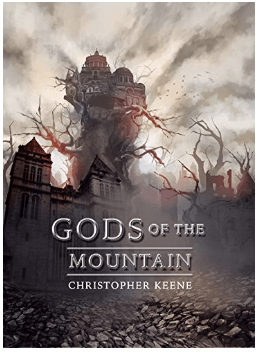
At any rate, what I’m posting here today is the fortieth indie book review on this blog, for the fantasy novel Gods of the Mountain by Christopher Keene, the first (and so far only) book of the Cycle of Blades series. I hope to get a few more reviews here during 2018, but I can’t make any promises right now.
Gods of the Mountain is set in an essentially medieval world, like most fantasy, though there are no magical races or classic mythical creatures here. The setting is the repressive Avaani Empire, where most of our characters live in the major city of Tyria. Near Tyria is the eponymous mountain, where a religious sect of magic practitioners called the Lunari worship entities called the Ksai, whom they understand as the source of their magical powers. The Lunari are able to use symbols which they hold in their minds to endow themselves with comic-book-like abilities such as flight, strength, speed, teleportation, and others. The Avaani people distrust the Lunari, and the Lunari view the Avaani as a race of godless ignorant blasphemers.
As the action picks up, an Avaani assassin and mercenary named Kessler appears wielding Lunari powers in a quest for revenge against the empire. He is manipulated from the shadows by a mysterious renegade Lunari, and part of his plan is to train up other outlaws in Lunari magic to join him in his quest. Our protagonist is Faulk, an Avaani soldier-turned-mercenary who is unwillingly trained by Kessler and soon becomes a fugitive of the Avaani law enforcement, embodied in the sadistic High Inquisitor Mullen, a bloodthirsty and crafty man who excels in torture and other unkind practices. When the antics of these rogue magic-users attracts the attention of the Lunari, a pair of Lunari come down from the mountain to rein them in, and in the process attempt to recruit Faulk into their sect. Being a godless Avaani, Faulk is skeptical of their tales of Ksai and devotion and heresy. As these and other events unfold, there are revelations and plots and schemes in the world of humans and the world of gods, culminating in an explosive climax.
Gods of the Mountain had its share of strengths and weaknesses. It had an original plot and some new ideas that I hadn’t seen in fantasy before. The way magic worked was entirely its own, although it reminded me some of the novel Elantris by Brandon Sanderson, and I saw that Keene listed Sanderson as one of his influences, so this is not too surprising. The book does well with heightening mystery and intrigue throughout, and in fact we don’t learn the villain’s identity and motivation until near the very end of the novel. One weakness of the book was the indistinct personalities of the some of the characters. A few of the more important characters spoke and acted essentially the same, and that diminished the reading experience some. The book ends on something of a cliffhanger, being the first book of a planned series. This didn’t bother me, but it might bother some readers. Being an adult fantasy novel, the book also has its share of violence, profanity, and sexual content, so more sensitive readers might want to avoid it for those reasons.
All in all, I enjoyed the book and I’d be curious to see what else this author has out there. Fans of fantasy and people looking for books with less conventional plots are likely to appreciate Gods of the Mountain.
And now once again, my bit of advertisement. If you are a fan of fantasy, you can look into my own book, Tales of Cynings Volume I, in print format here or Kindle format here.
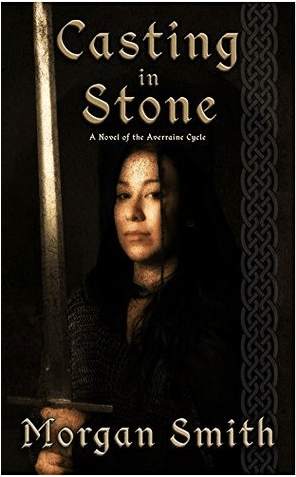 This is the first new review I’ve done since September. Working as a substitute teacher and maintaining a handful of other jobs have taken up a fair amount of my time, so I haven’t been writing as much or supporting other indie authors as much as I should. That’s not a great excuse, and I mean to do better in the near future. Now, this latest review (number thirty-eight) is on Morgan Smith’s
 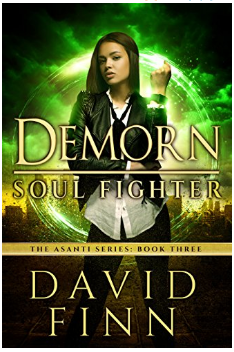 The next indie book review I’m doing is for David Finn’s sci-fi fantasy space opera all-around actionfest,
 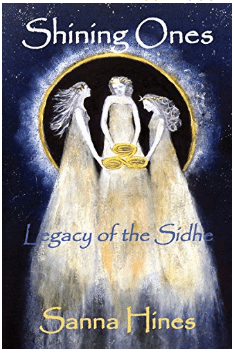 The next book I’m reviewing here is
  The twenty-fifth book I’ll review in this blog is the modern/urban fantasy novel
  Cameron W. Kobes